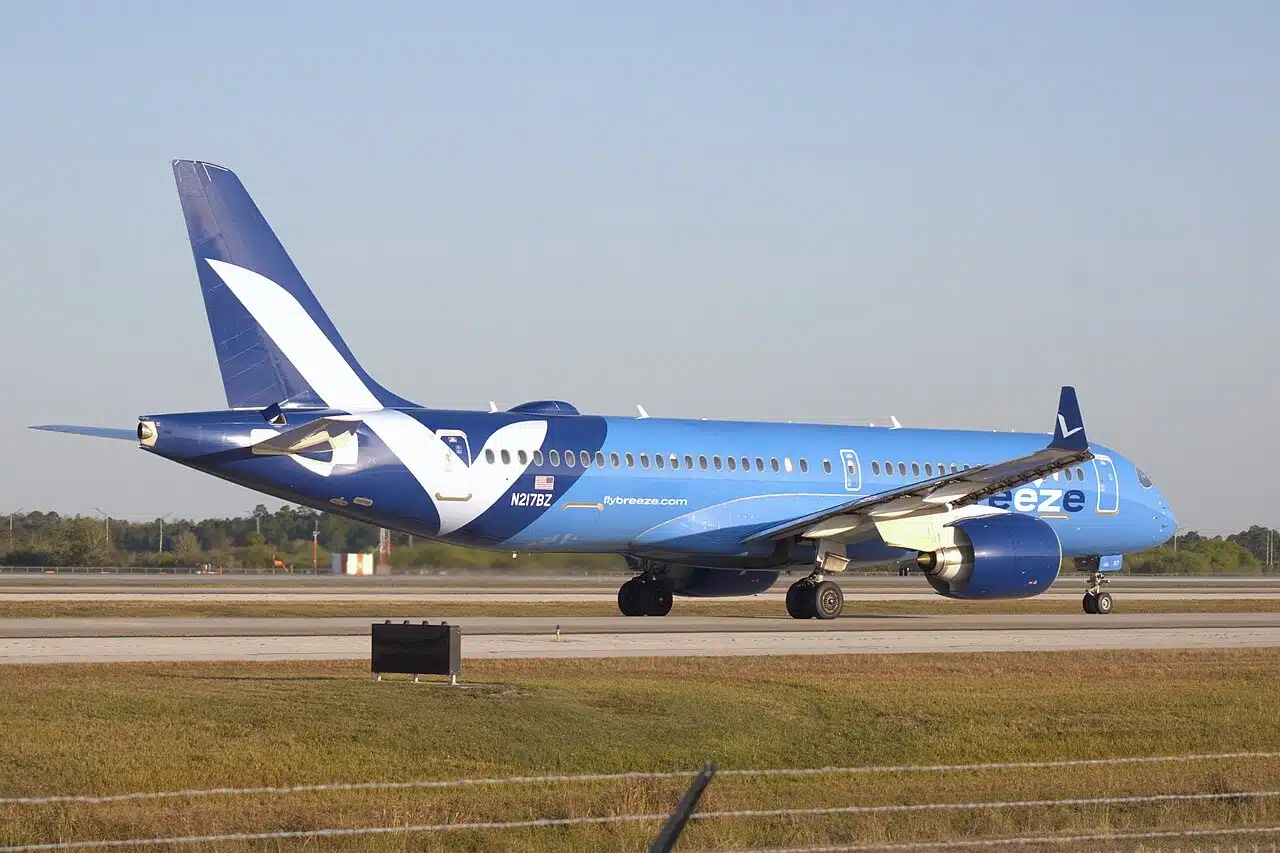
Breeze Settles on First International Destinations
Breeze Airways announced that the airline will begin offering international flights to the Caribbean, Mexico, and Jamaica. These flights will start in Q1 2026.

Southwest Airlines says transatlantic flights are coming. From starting routes from Baltimore with their Max 8s to a JetBlue acquisition, here’s what’s actually likely to happen.
Southwest Airlines recently claimed it’s planning to begin transatlantic international flights within the next five years. CEO Bob Jordan has outlined ambitions for Southwest to eventually serve 8 to 12 international destinations across the pond.
Rather than competing head-to-head on high-density routes that United, Delta, and American currently dominate, Southwest intends to go where customers want to fly and position itself as an alternative to those carriers.
As ambiguous as that plan sounds, Jordan cited Baltimore as the most likely jumping-off point for Southwest transatlantic travel, a departure city we have mentioned several times as our predicted home base for this service.
The writing has been on the wall for a while. Southwest is clearly shifting away from its ideal customer of a family of four looking for low-cost domestic flights and moving toward the premium traveler who flies the airline repeatedly. Southwest is open to creating premium classes and has already begun building lounges across several airports in its network.
While talk and implementation are two different things, let’s dive into four scenarios on how Southwest can actually pull this off in the next five years.
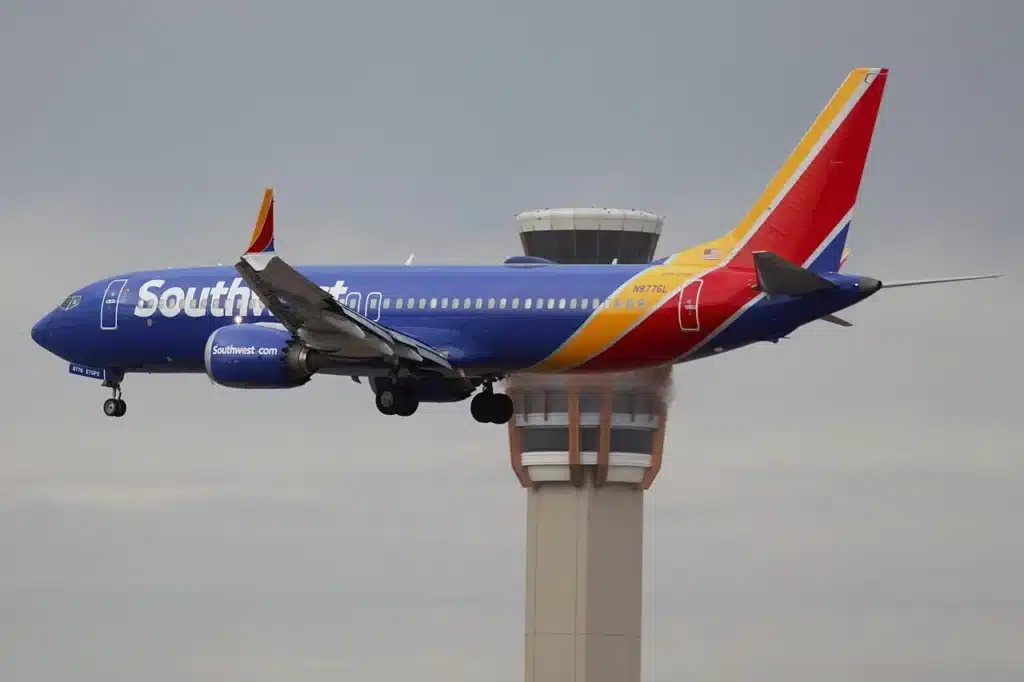
In our minds, this is the most plausible scenario, and one we have been sticking with from the start. Based on Bob Jordan’s statements, Southwest appears to be thinking along the same lines. Southwest transatlantic service has to include Baltimore.
The challenge is that Southwest does not have that Northeast presence JetBlue has, which was critical to the latter’s success in the transatlantic market. Southwest doesn’t have a huge presence in New York or Boston, both cities considered as the gateways to Europe.
The 4,100-mile range of the MAX 8 from Boston or New York stretches across the Atlantic and puts Iceland, Ireland, and the United Kingdom within reach. Any city on the coast of continental Europe sits right at the tail end of that range. The best that Southwest can do is Baltimore, who plays a huge role in Southwest’s domestic network.
| Destinations | Competing Airlines From BWI | Competing Airlines |
| Reykjavik | Icelandair (2x daily) | Icelandair (IAD, 3x Daily) |
| Dublin | None | American Airlines (PHL, 1x Daily), United (IAD, 1x daily) |
| Edinburgh | None | United (IAD, 1x daily) |
| Madrid | None | Iberia (IAD, 1x daily) |
| Madeira | None | None |
Referencing the table above, based on data taken from Routelinq in June 2026, from Baltimore there is virtually no competition on Europe’s secondary cities compared to Philadelphia and Washington-Dulles. Icelandair, American Airlines, United, and Iberia each show up as potential competitors, all operating from nearby Dulles & Philadelphia (Icelandair flies from Baltimore as well).
The problem is that Southwest does not funnel most of its traffic through New York or Boston, but rather Baltimore. It recently just pulled out of Dulles as well.
But Baltimore has lots of potential for international travel. It sits right in the middle of the DMV area, and the other options for residents seeking international flights are only Washington-Dulles and Philadelphia. Dulles is United territory, while Philly is American territory.
| Airport | 2025 International Passengers | 2025 Total Passengers | International Share |
| Washington Dulles (IAD) | 10.53 million | 29.01 million | 36.3% |
| Philadelphia (PHL) | 4.14 million | 30.14 million | 13.7% |
| Baltimore/Washington (BWI) | 1.30 million | 25.22 million | 5.2% |
The table above reflects the share of international traffic among the three major airports in the DMV area, sourced from their respective transit authorities.
Southwest would not just be adding new international routes, they would be tapping into a significant pool of DMV travelers who currently drive past BWI to catch international flights at Dulles or Philadelphia.
That opportunity grows considerably if Southwest keeps fares competitive, undercutting what United and American charge out of their respective hubs. However, this is only relevant if Southwest wants to compete on routes directly, which by the sounds of it seems like an unlikely course of action.
We predicted that Iceland would be their first destination from Baltimore. Icelandair already serves Baltimore, and Southwest has an interline agreement with Icelandair. There is a scenario in our minds where Southwest creates an arrangement similar to Alaska – Icelandair out of Seattle, with both Southwest and Icelandair running during peak travel demand to Iceland and Southwest backing off during the off-season. That would not expose Southwest’s neck when demand is thinner and would maximize efficiency and revenue when the demand is there.
Other potential destinations could include Madrid, Madeira, Edinburgh, and Dublin. Southwest should not even consider flights to London or Paris. Their customer base for international travel is likely made up of Southwest Rewards members who fly the airline enough domestically, rack up enough points, and then book a vacation trip across the pond.
Without being part of OneWorld or Star Alliance, it would be difficult to see travelers who rely on the big three jumping ship for transatlantic routes, especially if their preferred airline is already running that route alongside Southwest.
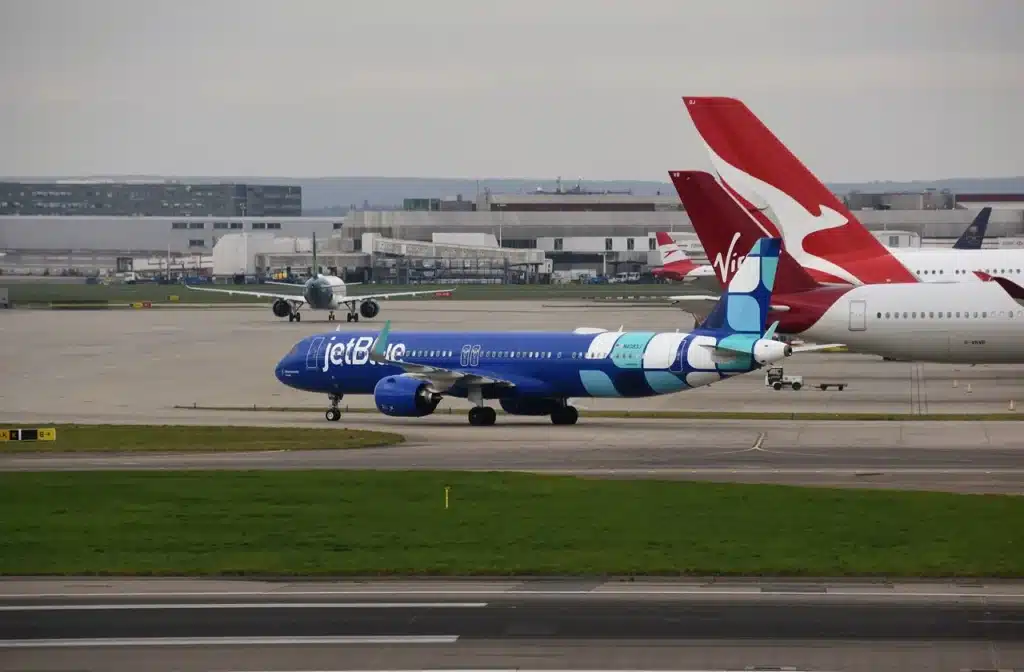
A very unlikely scenario, but not out of the realm of possibility, is Southwest acquiring JetBlue. JetBlue is struggling domestically, but one area where they appear to be holding their own is the transatlantic market. JetBlue’s Mint product is keeping them afloat on these routes and is rated among the best business class offerings of any U.S. airline. Since Southwest does not currently have a business class on any of their aircraft, they could benefit significantly from bringing JetBlue on board.
The real benefit of going down this route is Southwest acquiring hard to get slots at JFK and Boston-Logan, where JetBlue has built its European operation.
The more plausible move under this scenario would be to acquire the airline, sell off the entire Airbus fleet minus the A321LRs, and sell slots across the broader JetBlue network to offset some of the debt load Southwest would take on.
Southwest does not want an Airbus fleet. Their single aircraft type protocol keeps operational and training costs low. However, maybe they may make a short-term exception and operate some of JetBlue’s A321LRs with Mint while they develop their own business class product.
The problem with inheriting JetBlue’s JFK and Boston slots is that it puts Southwest directly in the crosshairs of Delta Air Lines, which will almost certainly offer a superior product. Southwest would need to fly to destinations Delta does not serve, which then puts them up against European transatlantic carriers like TAP Portugal and Aer Lingus. Not the worst problem considering the brand loyalty Southwest has built in the United States.
That said, a JetBlue acquisition would be the fastest and most proven path to transatlantic success. There would be no need for a market test since Southwest would be inheriting an already viable long and thin product. They would also gain valuable gates at both JFK and Logan, benefiting both their domestic and international operations. However, this reads a lot easier than actual implementation.
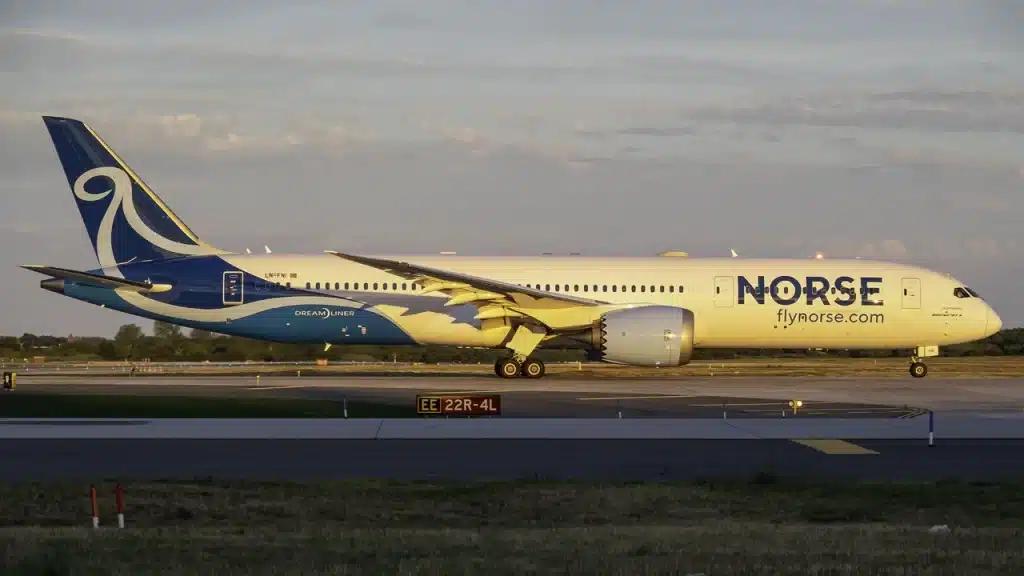
Perhaps the most thought-provoking and least likely path is Southwest acquiring assets from Norse Atlantic Airways, which is struggling and actively seeking a buyer.
Norse Atlantic is following in the footsteps of Norwegian Air Shuttle and Play Airlines, ultra low-cost carriers that tried to make this fare structure work across the Atlantic and ultimately failed. Norse Atlantic is currently being hit hard by the fuel crisis stemming from the Iran War, posting a $24 million loss in Q1 2026 on top of their $61 million loss in 2025.
This scenario only becomes plausible if Southwest decides to compete directly with Delta, United, or American, and the biggest obstacle in that competition is that Southwest has no widebody aircraft and no major international airport slots abroad.
The Boeing 737 MAX 8 simply cannot match the cabin product of the Airbus A330s Delta is running across the Atlantic. On the narrowbody side, the MAX 8 is more comparable to the Airbus A321XLRs that United and American will be deploying for their own long and thin flights.
If Southwest ever wants to enter the widebody market, taking over Norse Atlantic’s Boeing 787 leases from Indigo could be the most practical entry point available to them right now. Think about how Alaska inherited their 787s through the Hawaiian Airlines acquisition.
There are still far more questions than answers. The Boeing 787 would need to operate into heavily slot-restricted airports like London Heathrow, which is its own significant challenge.
Norse’s Dreamliners are mostly configured in high-density layouts and would require substantial cabin conversions to support any kind of premium product comparable to what Delta offers.
And these aircraft would not be operating from Baltimore. Southwest would need to tap West Coast hubs like Los Angeles, Honolulu, or Phoenix to justify the economics, at which point most travelers would find it more convenient to book one of the big three for the combined domestic and international journey.
All of that said, there is a fourth scenario worth considering. Southwest could be bluffing entirely.
While Alaska and JetBlue are actively testing whether a transatlantic product can work against the big three, Southwest may simply be signaling interest to keep competitors guessing while they focus on what actually needs fixing at home.
Consider that just a few months ago, Southwest was concerned enough about Alaska’s post-Hawaiian Airlines growth on the West Coast that they began encroaching on Alaska’s territory in Anchorage. That is not the behavior of an airline with a clear strategic focus. It looks more like an airline reacting to competitors rather than executing a deliberate plan.
International transatlantic flying may genuinely not be on the cards within the next five years. Southwest still needs to fully roll out its new cabin configurations and work through the operational changes that come with them. The lounge network is still in its early stages.
These are not minor loose ends, they are the foundation of the premium domestic product that would drive the Rewards members Southwest is presumably targeting as the core users of any future international service. Expanding internationally before that foundation is solid risks spreading an already stretched operation even thinner.
Southwest’s transatlantic ambitions make for genuinely exciting headlines, but the gap between intention and execution is where airline plans often quietly disappear. The airline is changing with the times after being stuck in the past for too long, and travelers do want quality and access to interesting destinations. Whether Southwest actually delivers is a different question.
We are staying on course with our Scenario #1 prediction. Southwest will build a transatlantic network out of Baltimore over the next five years, starting with destinations like Dublin, Reykjavik, Madrid, and Madeira, all within range of the MAX 8 fleet and none of them a direct confrontation with United, American, or Delta if they choose to fly from Baltimore.
But Scenario #4 deserves to sit in the back of your mind. Southwest is juggling a lot right now, and their real competition in this emerging space is JetBlue and Alaska, both low-cost carriers with settled business class products already in-market. Trying to leapfrog all of that and position as an alternative to the big three before taking a single transatlantic flight is an ambitious swing.
A lot can happen in five years. Whether Southwest crosses the Atlantic or quietly shelves the idea, every move they are making right now points toward a more premium, internationally minded airline. The direction is clear. The execution is the question.