Southwest’s IAD & ORD Retreat Opens a Door. But Who’s Walking Through It?
Southwest is abandoning O'Hare and Dulles. We break down why the moves backfired and why JetBlue is best positioned to capitalize on the void.

Southwest Airlines has signed several interline agreements to grow its international presence at the lower risk to the company as possible.
In early 2025, Southwest Airlines confirmed interest in long haul international service by applying for operating certificates in Europe. They also were rumored of potentially flying to Iceland from Baltimore.
While international service seems like to be the dream for the airline, the execution of this dream faces significant challenges. However, Southwest has drafted an unconventional solution that would mitigate a lot of these issues.
Southwest operates exclusively on Boeing 737 aircraft. Their new Max series of planes, which several are ETOPS-certified for routes to Hawaii and the U.S mainland, will yield issues reaching European cities without making operational sacrifices.
They’ll need to reduce weight and maximize fuel capacity. That means less passengers and less positive operational margins on flights. The 737 MAX simply wasn’t designed for this type of long-haul international flying. Some airlines are making it work, however for Southwest the juice just hasn’t been worth the squeeze as of yet.
Adding widebody aircraft or narrowbodies designed for long distance flights like the Airbus A321XLR will solve this problem. The 737 MAX has a range of roughly 3,300 nautical miles depending on the variant, while the Airbus A321XLR offers 4,700 nautical miles.
A flight from Baltimore could reach Paris or Madrid with the 737 Max, though without much safety margin for weight or wind variations. An A321XLR on the other hand, could reach just about anywhere in Europe from Baltimore, with much more room for unexpected winds or fuel consumption.
But even before considering the operational parameters for each type, the thought of diversifying the fleet for Southwest would be a culture shock. Fleet commonality around the Boeing 737 has been a core operational philosophy for Southwest. This creates a layer of efficiency that translates into success for decades. A departure from this strategy will remove a key competitive advantage the airline has.
But rather than compromise on changing their fleet strategy, Southwest has found another solution. They have elected to engage in international partnerships that serve customer demand without putting Southwest metal across oceans.
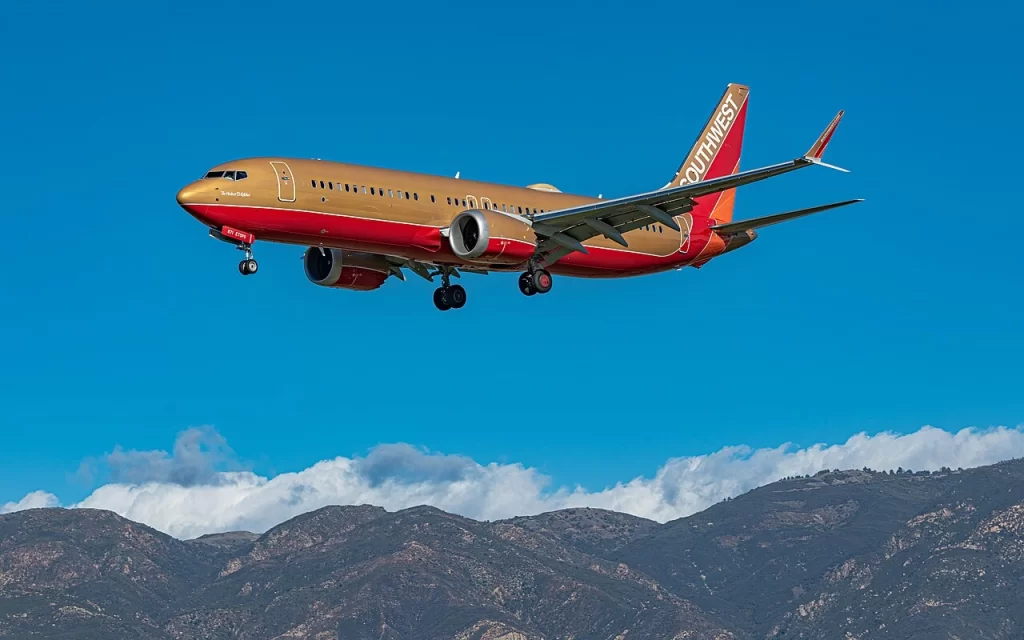
Southwest’s international aspirations aren’t new. After acquiring AirTran Airways in the early 2010s, the airline launched its first international service to the Caribbean and Mexico. Shortly after, they then added long-haul ETOPS flights to Hawaii. This gave Southwest a cadre of pilots experienced in international and open-water operations.
As of late, the competitive landscape has only fueled Southwest’s international plans. Alaska Airlines announced its own European aspirations, planning to build a widebody fleet using Hawaiian’s Boeing 787 Dreamliners as a foundation. Meanwhile, JetBlue expanded to Europe with its Mint product, and legacy carriers like American and United have opened routes to secondary European markets.
The timing appears favorable because Americans are traveling differently. About 107 million Americans traveled abroad in 2024, representing an increase of 108% compared to 2019 and 9.2% versus 2023.
The U.S economy has created some headwinds lately for domestic travel, with budget conscious travelers flying less or choosing ultra low cost carriers. Those who do choose to fly are increasingly seeking quality and interesting destinations to make their money go a lot farther.
Secondary European cities are seeing notable growth in American tourism, and travelers seem to be willing to pay for experiences beyond typical vacation spots.
Southwest recognized this opportunity and chose a different path than its competitors.
In a significant departure from its historical “go-it-alone” approach, Southwest has signed six international interline agreements in just two years:
Announced at the start of 2025, this partnership allows Southwest passengers to connect to Reykjavik from Baltimore, with expanded service from Denver, Nashville, Orlando, Pittsburgh, and Raleigh/Durham.
Launched in June 2025, this agreement opened Asian destinations for Southwest customers flying through Los Angeles, San Francisco, Ontario, and Seattle. This partnership presents substantial opportunities for both parties, as Southwest maintains significant operations at these West Coast airports.
In June 2025 alone, Southwest operated 1,313 weekly departures from these four airports, with LAX accounting for 530 takeoffs. For context, this LAX output is roughly double Southwest’s weekly departures from their Las Vegas hub.
Following in August 2025, this partnership with the Taiwanese carrier added Taiwan connections from Los Angeles, San Francisco, Seattle-Tacoma, and Chicago.
Announced in November 2025, this agreement provides access to the Philippines, broader Asia, Australia, and the Middle East through Honolulu, Los Angeles, Seattle, and San Francisco.
Perhaps one of the most strategically interesting partnerships came in December 2025. The German leisure airline now connects Southwest passengers from Las Vegas, Boston, Los Angeles, Portland, San Francisco, and Seattle to numerous European destinations.
The most recent agreement provides connections to worldwide destinations through Istanbul from Atlanta, Boston, Chicago, Denver, Detroit, Los Angeles, Miami, San Francisco, Seattle, and Washington D.C.
These six partnerships give Southwest customers access to virtually every corner of the globe except South America and Africa. All without purchasing widebody aircraft or making significant customer-facing product changes. The heavy lifting happened on the backend, integrating booking systems to allow seamless ticketing across partner airlines.

For Southwest, interline agreements represent what may be the smartest short-term strategy to remain competitive in the international market.
Airlines like JetBlue and Alaska have committed to fleet experiments. They’ve invested capital in narrowbody transoceanic aircraft and need to figure out how to make these routes profitable. If results don’t meet expectations, they face the challenge of owning expensive planes that don’t fit easily into domestic networks.
JetBlue’s experience illustrates some of these challenges. While the airline has reported their European product as profitable, they are now deploying their Mint-configured A321s on domestic transcontinental routes, potentially because dedicating aircraft exclusively to international routes presents operational constraints.
The Mint configuration converts nearly half the cabin to premium seating, which limits where these planes can operate profitably on domestic routes. They generally need high-volume business routes like New York to Los Angeles or San Francisco.
Southwest faces different dynamics with their partnership model. Their partners handle the flying operations, and if a partnership doesn’t generate sufficient passenger volume or revenue, either party can adjust or terminate the agreement with less capital at stake.
The partner airlines benefit as well. They’re working to build their own U.S. customer base, and if demand doesn’t materialize, they can reduce operational costs in the country.
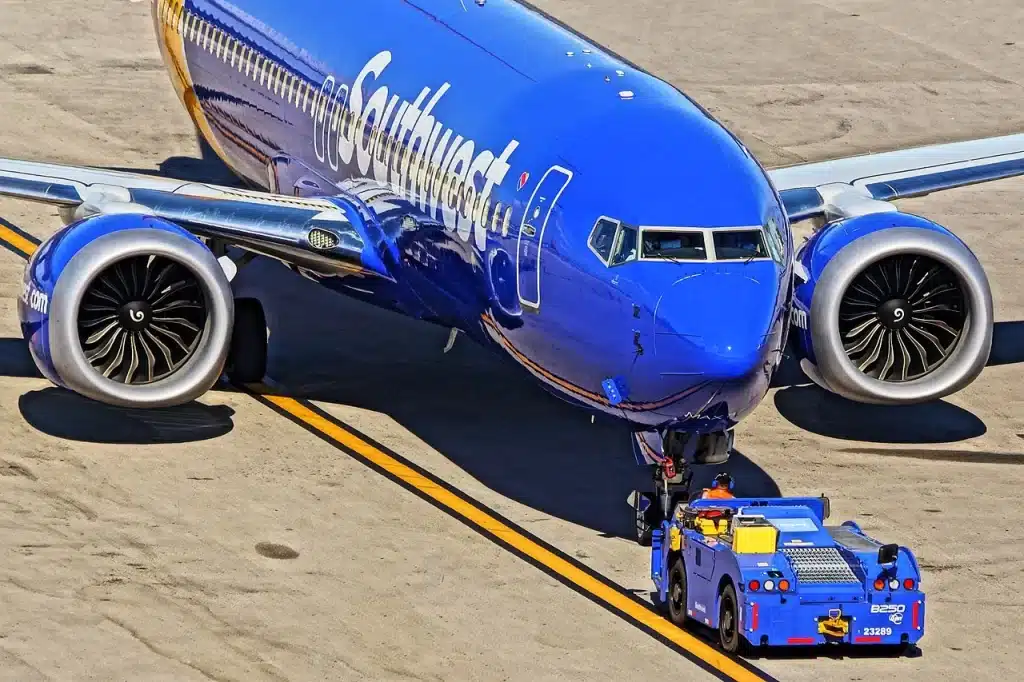
Southwest may have some competitive advantages over both Alaska and JetBlue in the near term. Alaska will spend the next few years working through the kinks of international widebody flying. Which can mean the success of their European service remains to be seen.
JetBlue continues adjusting their transatlantic routes from JFK and Boston while also addressing domestic challenges. For Winter 2025, JetBlue reduced one third of its transatlantic capacity. Given these dynamics, JetBlue’s European product may present a limited competitive threat to Southwest’s partnership model in the immediate future.
Both airlines are running significant experiments with considerable capital at stake. Southwest’s experiment appears notably more conservative in terms of financial risk.
Competing with legacy carriers presents different challenges. American, United, and Delta offer nonstop international flights from airports nationwide. Southwest needs to connect passengers through hubs. Next to a partner gateway airport, then onto international flights. This adds complexity to the journey, and that additional connection time may offset any price advantages over legacy carriers for many travelers.
For most people seeking international flights, the convenience of nonstop service will likely remain more compelling compared to Southwest’s value proposition.
Southwest may not abandon the idea of operating their own transoceanic flights entirely, though destinations in Asia, the Middle East, Africa, and most of South America seem less likely. Europe remains the most realistic target.
Southwest is likely watching their Icelandair partnership with particular interest. Iceland sits 2,400 nautical miles from Baltimore. Well within 737 MAX range.
It’s a growing tourist destination and functions as a natural mid-point for European travel. If Southwest can establish a model where they fly passengers to Iceland and Icelandair connects them to Europe, both airlines could benefit without significant new investment.
Condor presents another opportunity, though less likely. Nonstop flights to Germany would require addressing range limitations and operational considerations.
However, Southwest might potentially explore routes to closer European destinations like Spain or Portugal, similar to approaches taken by United and JetBlue.
This would likely require Southwest to successfully roll out their new First Class product and modernize their cabin offerings to compete in the transatlantic market.

Southwest’s partnership-driven international expansion appears thoughtfully calculated. The strategy requires minimal capital investment, and success depends largely on convincing their customer base that partner airlines offer compelling alternatives to competitors’ nonstop flights.
This approach seems to be an experiment Southwest will monitor closely, though it’s likely not a temporary plan to satisfy their international desire.
The airline may eventually launch its own service to Iceland from Baltimore. However, to become a more significant player in transatlantic travel, they’ll need to refine their First Class rollout and demonstrate they can compete on the product quality travelers expect when crossing the pond.
For now, Southwest has found a way to offer international connectivity while staying true to their operational DNA. That’s the kind of strategic thinking that has served them well for decades.