By Andrew McMenamy | Last updated: January 9, 2026
Flying across the Atlantic Ocean used to mean having to fly on a massive widebody plane like the Boeing 747, Boeing 777, or the Airbus A350. For the most part, it still applies but that norm is beginning to change. Airlines are now deploying single-aisle narrowbody jets on transatlantic routes. This new norm is changing how Americans travel to Europe.
In many aviation circles, this trend is called "long and thin" flying. This type of flying connects cities that would otherwise never support daily widebody service. For travelers, this yields more nonstop options to secondary European destinations, sometimes more affordably than flying on a widebody. But narrowbody transatlantic flights do come with trade-offs that passengers need to understand.
In this guide, we'll provide easy to understand information about narrowbody transatlantic flights. We'll explain why airlines are making the shift, which carriers fly these types of routes, what aircraft they use, and most importantly, what you should expect as a passenger. By the end, you'll be equipped to make informed decisions about whether narrowbody transatlantic travel works for you, on your next trip to Europe.
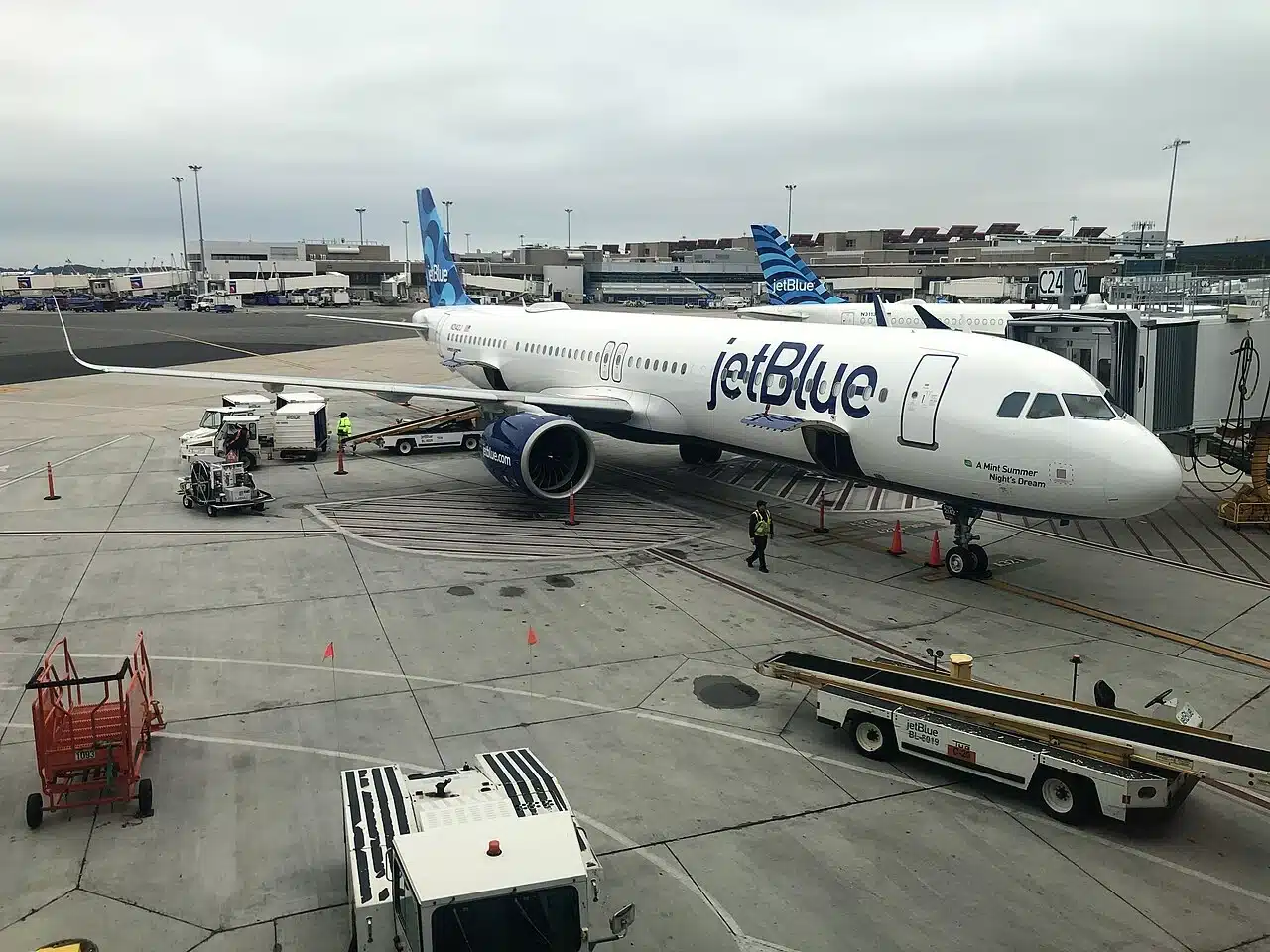
A narrowbody aircraft is a single-aisle airliner with one center walkway and usually six seats across (3x3 configuration). These are like the planes you would take on a flight between New York to Florida or Los Angeles to Seattle. These aircraft are traditionally operated on short to medium-haul domestic routes.
Widebody planes, in comparison, feature two aisles, wide cabins, and fit eight to ten seats across. They are simply put, bigger planes that would normally operate on domestic flights. They are used as the workhorses for long-haul international flying.
Recent advances in engine technology, aerodynamics, and fuel efficiency have given narrowbody planes the range needed for transatlantic flights. Jets like the Airbus A321LR, A321XLR, and Boeing 737 MAX can now fly 3,500 to 4,700 nautical miles, making flights between the East Coast of North America and Western Europe possible.
The recent shift towards narrowbody service across the pond isn't arbitrary. Economics and market dynamics are the main drivers behind the change.
Airlines use the phrase "long and thin" to describe long distance routes with modest passenger demand. Cities like Edinburgh, Reykjavik, Shannon, or Porto may not generate enough traffic to fill a 300-seat Boeing 787 Dreamliner for daily service. However, the demand for these destinations may support daily service if the airline chooses to use a 150 - 180 seat Airbus A321 or Boeing 737 Max.
Narrowbody aircraft give airlines a few advantages for these types of markets. Using narrowbody planes could yield lower trips costs, creating more profitability at lower load factors. A widebody flight that is 60% full potentially loses money. A narrowbody flight at 60% capacity can still turn a profit. Airlines using narrowbodies can maintain frequency without overserving the market. Instead of just three weekly widebody flights, carriers can offer daily narrowbody service, giving passengers more scheduling flexibility.
These narrowbody planes also help enable point-to-point service that bypass Europe's congested hubs. Rather than flying and having to connect at London Heathrow or Frankfurt, passengers can fly directly between Hartford, Connecticut to Shannon or Providence, Rhode Island to Belfast.
Operating narrowbody planes cost less per flight than a widebody. Fuel consumption is much lower. Since these planes tend to be newer, maintenance costs are reduced. Crew requirements are smaller. Ground handling is more streamlined.
For airlines, this means they have the ability to serve routes that wouldn't be feasible with larger planes. For passengers, it can translate into lower fares, particularly in economy class.
Not all airports can safely accommodate widebody aircraft. Weight restrictions, runway length, gate sizing, and terminal infrastructure can prevent large widebody planes from serving certain airports.
Narrowbodies open up transatlantic service to airports that physically cannot handle widebody operations.
Stewart International Airport in Newburgh, New York is a perfect example. Located about an hour north of New York City, it offers travelers an alternative to congested JFK and Newark Airports. PLAY Airlines used to serve Iceland from Stewart with A321s. No widebody could operate there efficiently.
Not all narrowbody planes are equal when it comes to comfort and capability during long distance transatlantic flights. Understanding that airlines use specific aircraft on these type of routes can help you make informed booking decisions.
The A321LR boosts the range of the standard A321NEO through additional center fuel tanks and reinforced landing gear to help with heavier than normal landings. It can fly about 4,000 nautical miles, making most East Coast to Western Europe routes achievable.
JetBlue pioneered A321LR transatlantic service in 2021. Their planes feature 138 seats with a heavy premium cabin focus: 24 Mint business class seats, 24 premium economy seats, and just 90 economy seats.
The reduced capacity is necessary because of the weight restrictions for the A321LR, who also needs to account for weight that extra fuel reserves carry.
TAP Air Portugal also flies the A321LR on routes between Lisbon and North America, with 16 business class seats and a standard economy configuration.
The A321XLR is the latest evolution in narrowbody transatlantic capability. With a range of 4,700 nautical miles, it can reach just about all transatlantic destinations from the East Coast and opens up possibilities for routes from the Midwest.
Iberia was the first transatlantic A321XLR operator in November 2024, launching service between Madrid and Boston. Their configuration includes 14 lie-flat business seats and 168 economy seats, tallying up to 182 total passengers. American Airlines will introduce the A321XLR to its fleet in 2026, initially using it on routes between New York - JFK and Edinburgh, Scotland.
The XLR is purpose-built fuel efficiency and extended range means that airlines no longer need to sacrifice capacity for range. It's the right tool for long and thin transatlantic flying.
Boeing's response to the A321LR is the 737 MAX family. It doesn't quite match the range of the A321XLR, the MAX 8 can handle most East Coast to Western Europe routes as it has a range of about 3,550 nautical miles.
Icelandair operates the MAX on routes between Iceland and North America. United Airlines has started deploying the MAX on select transatlantic routes. Air Canada is expanding its MAX transatlantic operations significantly in 2026 with new routes to European destinations from Montreal, Toronto, and Halifax.
The Max 8 typically seats 160-180 passengers depending on the seating configuration, with airlines offering varying levels of premium seating.

While production ended in 2004, the 757 remains relevant in narrowbody long and thin service. United Airlines continues to fly the 757 on routes from Newark and Washington Dulles to cities like Edinburgh and Reykjavik.
However, the 757 doesn't have too long to live. Airlines are actively replacing these planes with more fuel-efficient A321XLRs and 737 MAXs. Expect the 757's transatlantic role to diminish almost completely by the end of the 2020's.
Delta uses its 757-200 on select transatlantic routes, including seasonal service to Reykjavik. Icelandair just retired their last Boeing 757. They just transitioned to the 737 MAX for their transatlantic flights.
American air carriers have made narrowbody transatlantic expansions somewhat of a norm as of late. Here's what each major U.S airline offers.
American is entering the narrowbody transatlantic market with significant ambition. The airline began A321XLR service in January 2026 with flights between New York-JFK to Edinburgh.
Current Routes:
Aircraft: Airbus A321XLR
Configuration: 20 Flagship Business seats, 12 Premium Economy seats, 123 Economy seats (155 total)
Strategy: American is using narrowbody planes to compete directly with JetBlue and United on routes where widebody service isn't economically feasible. The airline has positioned itself to capture year-round demand to Edinburgh by starting its own service before JetBlue's seasonal operations to Scotland start up again in May.
American's A321XLR fleet will be based in New York and Philadelphia to start. The carrier expects their XLR fleet to grow throughout 2026, enabling additional narrowbody service to secondary European markets.
Read more about American's strategy: American Airlines to Launch Transatlantic Flights with Airbus A321XLR
JetBlue was one of the first pioneers of the most recent push of narrowbody transatlantic service among U.S carriers. Since 2021, the airline has operated these flights from Boston and New York-JFK to multiple European destinations.
Current Routes (all seasonal, typically May-October):
Aircraft: Airbus A321LR
Configuration: 24 Mint business class, 24 premium economy, 90 economy (138 total)
Strategy: JetBlue focuses on connecting their Northeast hubs to Europe. The airline has targeted destinations with limited competition or where it can leverage its Boston and New York presence.
JetBlue's is competing against legacy carriers with superior products and wider networks. Their reduced seat count means they need to generate significant revenue from premium cabins to make routes profitable.
Performance Reality: JetBlue's transatlantic journey has been inconsistent. They have tried numerous route pairings like ones between New York and Amsterdam which failed. Their Boston-Edinburgh flight carried only 10,000 passengers between July 2024 and June 2025. Boston-Dublin performed much better with 42,000 passengers. Load factors are around 70% which is decent but nothing spectacular.
Read more: JetBlue Expands Boston Transatlantic Flights to Milan & Barcelona

United flies the most extensive narrowbody transatlantic network among the U.S. carriers, with over 113 weekly departing flights in summer 2025.
Select Routes:
Aircraft: Boeing 757-200, Boeing 737 MAX 8
757-200 Configuration: 16 Polaris business, 45 Economy Plus, 115 Economy (176 total)
Strategy: United has built the largest U.S. narrowbody transatlantic operation. The airline uses these planes to serve secondary European cities from its major East Coast hubs, assisting its widebody-heavy transatlantic offerings.
United is transitioning from their Boeing 757s to 737 Maxes and has A321XLRs on order. As more of these next generation planes arrive, expect United to expand its long and thin route network even more.
Read more: United Airlines to Serve Iceland from Washington Dulles
Delta avoids flying narrowbodies on transatlantic routes as they prefer using widebody planes for flights to Europe.
Select Routes:
Strategy: Delta's approach differs significantly from United. The carrier likes to use premium widebody service for its core transatlantic routes and uses narrowbodies very sparingly.
European and other international carriers abroad have definitely embraced narrowbody transatlantic service more aggressively than their U.S. counterparts. These airlines offer alternative routing options and often competitive pricing.
Iberia became the world's first A321XLR operator in November 2024, helping lead the next new wave of narrowbody flying across the pond.
Current and Announced Routes:
Aircraft: Airbus A321XLR
Configuration: 14 lie-flat business class, 168 economy (182 total)
Strategy: Iberia uses the A321XLR to connect Madrid with secondary North American cities. Madrid is also a connecting hub for passengers traveling between North America, Europe, Africa, and beyond.
Iberia claims that the A321XLR consumes 40% less fuel per seat than widebody planes on equivalent routes. This economic advantage allows Iberia to test new markets with minimal risk.
The carrier expects to receive a total of eight A321XLRs. This will help position the airline for further expansion through 2026.

Aer Lingus has been flying narrowbody service between the United States and Ireland for years and is expanding further into the U.S thanks to deliveries of the Airbus A321XLR.
Select U.S. Routes:
Aircraft: Airbus A321LR, A321XLR (deliveries ongoing)
Strategy: Ireland's strategic position between mainland Europe and North America makes it an ideal location for narrowbody transatlantic flights. This allows Aer Lingus to use their Airbus A321s to comfortably fly passengers between both continents.
Aer Lingus connects the U.S. to Ireland while offering connections to European destinations. The airline benefits from Ireland's pre-clearance U.S. customs program, allowing passengers to clear U.S immigration before departure.
Read more: Aer Lingus Bringing Nonstop Raleigh-Dublin Flights | Aer Lingus Flights Between US-Dublin
TAP flies a rather large narrowbody transatlantic network, with 1,110 total A321 flights in Winter 2025 - 2026. That accounts for a 148% increase compared to their 2019 total.
U.S. Routes:
Aircraft: Airbus A321LR, A321XLR
Configuration: 16 business class (alternating 2-2 and 1-1), economy
Strategy: TAP use their narrowbodies to connect Portugal and North America. This connection helps route passengers through Portugal onward to destinations throughout Europe, Africa, and Brazil. Newark- Lisbon is one of the airlines' busiest long and thin routes.
Read more: American Cities with Direct Flights to Portugal on TAP Air Portugal
Icelandair is at the pinnacle of the transatlantic stopover model which helps it operate the one of the largest transatlantic networks.
Fleet Mix: Boeing 757-200, 757-300, 737 MAX 8, 737 MAX 9
U.S. Destinations: Boston, New York-JFK, Newark, Washington Dulles, Chicago, Denver, Seattle, Portland, Minneapolis, and more
Strategy: Every Icelandair flight over the Atlantic stops in Reykjavik. This allows the airline to connect smaller U.S cities to multiple European destinations with narrowbody aircraft as the island is centered right between North America and Europe. This can be a benefit for some passengers as they can also add Iceland stopovers to their itinerary at no additional cost.
Read more: Icelandair Routes Between Iceland and The United States
SAS operates A321LR service on select transatlantic routes, connecting Scandinavia with the U.S. East Coast.
Select Routes:
Aircraft: Airbus A321LR
Configuration: 22 business class (alternating 2-2 and 1-1), economy
Strategy: SAS uses narrowbodies to supplement its widebody transatlantic schedule, maintaining frequency while managing capacity on routes with moderate demand.
Air Canada is significantly expanding narrowbody transatlantic operations in 2026 using both 737 MAX 8s and incoming A321XLRs.
New 2026 Routes:
Aircraft: Boeing 737 MAX 8, Airbus A321XLR (deliveries beginning 2026)
Strategy: Air Canada is the 2nd largest North American carrier by number of European destinations. The flag carrier uses narrowbodies to connect secondary markets that can't support widebody service.
One particular route pairing, Montreal - Nantes, will be Air Canada's longest 737 Max flight by distance which only highlights how Air Canada is pushing the limits of single-aisle planes.
WestJet operates 737 MAX 8 transatlantic service from several Canadian cities to Europe.
Strategy: The Canadian carrier suspended most MAX transatlantic routes during the aircraft's grounding but is gradually resuming and expanding service. Routes include Halifax and Calgary to European destinations, targeting leisure travelers and ethnic traffic.

Azores Airlines connects the Azores with North America using narrowbody aircraft.
U.S. Routes: Boston and Oakland to Ponta Delgada, Terceira
Aircraft: Airbus A321neo
Strategy: The Azores' location in the mid-Atlantic makes narrowbody operations viable. Azores Airlines is taking advantage of the increasing tourism demand to the Portuguese islands.
Read more: Azores Airlines Flights from USA
La Compagnie operates all-business-class A321LR service, a unique narrowbody transatlantic model.
Routes: Newark to Paris Orly, Newark to Milan Malpensa
Aircraft: Airbus A321LR
Configuration: 76 lie-flat business class seats (all-business configuration)
Strategy: La Compagnie targets business travelers and premium leisure passengers willing to pay for comfort but not legacy carrier prices. Roundtrip fares start around $2,500, significantly below traditional carriers' business class while offering lie-flat comfort.
This boutique approach demonstrates the flexibility of narrowbody platforms, serving ultra-premium segments viably.
Narrowbody transatlantic flights connect dozens of city pairs that normally wouldn't have international access. Understanding where these services operate from will help you identity alternatives to traditional widebody routes from most major airports.
Based on flight frequency and passenger volumes, these routes see the most narrowbody service:
Narrowbody aircraft have unlocked nonstop service to European cities that previously required connections:
U.S. Side: Hartford, Providence, Newburgh, Raleigh-Durham, Halifax, Baltimore, smaller Northeastern cities
European Side: Edinburgh, Shannon, Porto, Ponta Delgada, Nantes, secondary Spanish cities beyond Madrid and Barcelona
Many narrowbody transatlantic routes operate seasonally (typically May through September or October) rather than year-round. This reflects leisure-heavy demand that drops dramatically outside summer months.
Year-Round Routes: Major city pairs like Newark-Lisbon, JFK-London, routes connecting to/from Dublin and Reykjavik
Seasonal Routes: Most JetBlue European service, secondary destination routes, smaller U.S. city connections
Understanding the passenger experience is critical before booking a narrowbody transatlantic flight. While these services offer benefits, they come with some drawbacks versus traditional widebody service.
The most obvious difference: narrowbodies are tighter. A single aisle means:
Seat Width: Economy seats on narrowbody aircraft typically measure 17-18 inches wide versus 18-19 inches on widebody jets. This may not sound like much, but over a 7-hour flight, every inch matters.
Legroom: Legroom varies by airline but is generally comparable to widebody economy. Expect 30-32 inches of pitch in standard economy, with premium economy offering 36-38 inches.
Cabin Configuration: Most transatlantic narrowbodies economy class use 3-3 seating. This means no true window-aisle seat pairs unless you're paying for premium seating (which often features 2-2 or 1-1 configurations).
Business class on narrowbody aircraft has improved dramatically, but it still differs from widebody premium cabins.
The Good:
The Bad:
What You'll Get:
What You Won't Get:
Narrowbody transatlantic flights typically range from 5 to 9 hours depending on routing and winds. Once the flight time totals closer to 8 hours, that's when you hit the uncomfortable middle ground. A narrowbody flight close to 8 hours might be too long for most. Anything less may be manageable for most travelers.
Managing Comfort:
Airlines face a significant hurdle: passenger perception. When given a choice between a widebody and narrowbody on the same route at similar prices, most travelers choose the widebody.
One passenger commented: "Very uncomfortable single aisle...I'm only going across the ocean on widebodies. Do not cross the ocean on a narrowbody. It's miserable."
This sentiment is common, particularly among passengers accustomed to widebody transatlantic service. Airlines must overcome this bias through competitive pricing, schedule convenience, or direct routing that eliminates connections.
Not every passenger should choose narrowbody transatlantic service. Understanding when it makes sense helps you make better travel decisions.
Direct routing saves significant time: A nonstop narrowbody flight from Hartford to Dublin beats connecting through JFK or Boston on a widebody, even if the narrowbody is less comfortable. Four extra hours in airports and connections outweighs cabin comfort for most leisure travelers.
Price differences are substantial: If a narrowbody ticket costs $400 and the widebody option is $700, that $300 difference funds several nice meals in Europe. For budget-conscious travelers, economics might be more important than comfort.
You're flying business class: Narrowbody business class products have matured significantly. JetBlue Mint, Iberia's A321XLR business, and La Compagnie's all-business configuration rival widebody premium cabins. If you're paying for lie-flat comfort, the narrowbody experience is perfectly acceptable.
Schedule flexibility matters: Narrowbodies enable more frequency on routes that can't support daily widebody service. If you need to travel on a Tuesday and only the narrowbody operates that day, the choice is made for you.
Secondary airports are convenient: Flying from Providence instead of Boston might save you two hours of ground travel. That convenience can offset any in-flight comfort setbacks.
Flight duration exceeds 8 hours: Narrowbody comfort becomes genuinely challenging on the longest transatlantic routes. If your flight time approaches 8-9 hours, widebody cabins provide notably better comfort.
You're traveling economy with large bodies: If you're 6'3" or 250+ pounds, the narrowbody economy class will be cramped. Widebody economy offers marginally more space that makes a real difference for larger passengers.
You have mobility issues: Narrower aisles and tighter lavatories create challenges for passengers with mobility limitations. Widebody aircraft provide easier movement and more accessible facilities.
Premium experience matters: Despite improvements, widebody premium cabins still offer superior amenities, more space, and better service. If you're spending thousands of dollars on business or first class, widebody aircraft justify the cost better.
Flying with children: Families benefit from widebody aircraft with their multiple lavatories, more overhead bin space for all the gear, and generally better ability to move around during long flights.
Book Early for Best Pricing: Narrowbody routes often have limited inventory. Airlines reduce prices when announcing new routes but raise them as departure approaches and seats fill.
Monitor Seasonal Schedules: Many narrowbody routes operate seasonally. If you're booking for June, don't panic if the flight doesn't appear in the schedule yet. Airlines typically load summer schedules 6-8 months in advance.
Consider Positioning: Sometimes connecting to a narrowbody transatlantic flight makes sense. Flying from Dallas to Boston and then Boston to Dublin on JetBlue might offer better timing than Dallas-London on American and connecting to Dublin.
Check Aircraft Type: Airlines sometimes swap aircraft. Verify your booked flight will actually operate narrowbody service, particularly on routes served by both widebody and narrowbody aircraft.
Maximize Personal Item: Most transatlantic narrowbody carriers allow a free personal item (backpack, purse). Pack strategically to fit as much as possible without paying carry-on fees.
Check Baggage Policies Carefully: Ultra-low-cost carriers charge for carry-on bags. If you need more than a personal item, factor these fees into your pricing comparison.
Bring Entertainment: Not all narrowbody aircraft have seatback screens. Download movies, TV shows, books, and podcasts before departure. Bring headphones with airplane adapters.
Pack Comfort Items: Neck pillow, eye mask, earplugs or noise-canceling headphones, and compression socks improve comfort significantly on narrowbody flights.
Arrive Early: Secondary airports may have fewer check-in counters and security lanes. Budget extra time.
Gate Check Wisely: Overhead bins fill quickly on narrowbodies. If you have a carry-on, board early or be prepared for gate checking.
Pre-Order Meals: Some carriers allow advance meal ordering. This guarantees your choice and can save time during service.
Choose Your Seat Strategically:
Manage Sleep:
Stay Hydrated:
Move Regularly:
This section is updated regularly as airlines announce new routes and aircraft deliveries.
Yes, absolutely. Narrowbody aircraft operating transatlantic routes meet the same FAA and international safety standards as widebody jets. Modern narrowbodies like the A321XLR and 737 MAX are equipped with ETOPS (Extended-range Twin-engine Operational Performance Standards) certification, allowing them to fly routes more than 60 minutes from the nearest airport.
Airlines use conservative fuel planning with substantial reserves. The limitation isn't safety. It's comfort and economics.
Comfort is subjective and depends on several factors including your size, where you sit, flight duration, and expectations. Most passengers find narrowbody transatlantic flights manageable for 5-7 hours, comparable to a cross-country U.S. flight.
Flights exceeding 7-8 hours become notably less comfortable in economy class. The single aisle, tighter seats, and fewer lavatories compound fatigue on longer crossings. Business class passengers generally find narrowbody premium cabins perfectly acceptable.
For Business Class: La Compagnie (all-business configuration), JetBlue Mint (excellent hard product), and Iberia A321XLR (modern lie-flat seats) lead the category.
For Economy: TAP Air Portugal and Aer Lingus offer solid economy products with reasonable amenities. Iberia's A321XLR features newer cabins.
Not necessarily. Narrowbodies work well for:
Avoid narrowbodies if:
The trend is accelerating, not slowing. As airlines take delivery of more A321XLRs and additional 737 MAX variants, expect:
The economics simply favor narrowbody deployment on routes with moderate demand. While widebodies will always dominate high-volume routes like New York-London or Los Angeles-Tokyo, narrowbodies are unlocking hundreds of city pairs that couldn't otherwise support nonstop service.
Most booking sites don't filter specifically for aircraft type, but you can identify narrowbody service through:
Google Flights:
Airline Websites:
ExpertFlyer and Similar Tools:
Pro Tip: If a route is served by a regional/secondary airport on either end, it's almost certainly narrowbody service.
It varies by airline and aircraft:
WiFi:
Entertainment:
Power/USB:
Check airline websites for specific aircraft amenities before booking if these features are important to you.
Full-Service Carriers: Yes. American, United, JetBlue, Iberia, TAP, Aer Lingus, Icelandair, and SAS include meals and beverages on transatlantic flights regardless of aircraft type. Expect a full meal service shortly after takeoff and a light meal/snack before landing on daytime flights.
Business Class: All carriers provide premium meal service in business class, typically with multiple courses and complimentary alcohol.
Narrowbody transatlantic flying isn't for everyone, but it has opened up travel possibilities that simply didn't exist a decade ago. Cities like Hartford, Raleigh-Durham, Providence, and smaller European destinations now have nonstop transatlantic access because narrowbody economics make these routes viable.
The question isn't whether narrowbody transatlantic service is "good" or "bad." The question is whether it fits your specific travel needs.
If you prioritize:
If you prioritize:
The narrowbody transatlantic revolution is here to stay. As airlines take delivery of more fuel-efficient, longer-range single-aisle aircraft, expect this trend to continue expanding.
Choose wisely based on your specific circumstances, and you'll find narrowbody transatlantic service delivers excellent value or realize it's not for you and stick with traditional widebody routes. Either way, you now have the information to make an informed decision.
This guide is maintained regularly with the latest route announcements, airline developments, and industry news. Last updated: January 9, 2026
Related Articles: