Home»
The No Nonsense Guide to Ultra Low Cost Carriers In The United States
The No Nonsense Guide to Ultra Low Cost Carriers In The United States
By Andrew McMenamy | Last updated: December 8, 2025
For the bulk of air travelers here in the United States and around the world, cost is a huge factor in determining if you're in the market to fly or not. There are lots of airlines that charge premium prices that make flying unaffordable. These prices would make even simple vacations very costly. Luckily for you, there are a subset of airlines that cater directly to the extreme budget conscious market. These airlines are called ultra low cost airlines.
In this guide, we will provide you with the most comprehensive but understandable information about ultra low cost airlines. We'll discuss the industry here in the United States and cover the various U.S airlines under this umbrella. Ultimately, we will provide you with the knowledge you need to make an informed decision to fly with a ULCC or decide to fly between two carriers.
What defines an ultra low cost carrier?
Ultra low cost carriers are airlines that charge passengers the lowest prices as operationally possible. They typically offer flights to leisure destinations or vacation spots. Think Las Vegas or Florida.
Their goal collectively is to attract that market of flyers that want to fly as cheaply as possible.
However, when charging the lowest fares on the market, there are sacrifices customers will have to make. Typically ULCC's are known to have fees for just about every creature comfort imaginable. Overweight bags, picking your own seat amongst others, will affect your wallet.
ULCC's also don't have inflight entertainment systems or inflight catering. You are on your own to handle those items.
How are they different from a low cost carrier?
So, you now know about ultra low cost carriers. But you also heard the term low cost carriers being thrown around. What is the difference?
Low cost carriers are a step above ultra low cost carriers. Here in the United States, think Southwest Airlines or JetBlue Airways. These carriers charge relatively low prices, but have more fringe benefits included.
For example, JetBlue has complementary inflight entertainment and snacks. An ultra low cost carrier would not have these benefits or would charge extra to include them in your experience.
Quick ULCC Comparison Table (2025)
Airline
Fleet Size
# of Destinations
Main Focus
International Routes
Best For
Allegiant
127
124
Connecting underserved cold weather cities to warm weather destinations
No - Domestic only (serves Canadian border cities)
Leisure travelers from smaller cities to Vegas/Florida
Avelo
21
41
Connecting underserved East Coast cities to the South and local international destinations
Yes
Northeast travelers seeking alternatives to major airports
Frontier
161
123
Country's leading ULCC with coast to coast network
Yes
Budget travelers needing coast-to-coast or international options
Spirit
164
75
Country's second leading ULCC. Focuses on leisure destinations with Florida being the primary destination
Yes
Florida-bound travelers, hub connections
Sun Country
59
60+
Connecting the Midwest to warm weather destinations
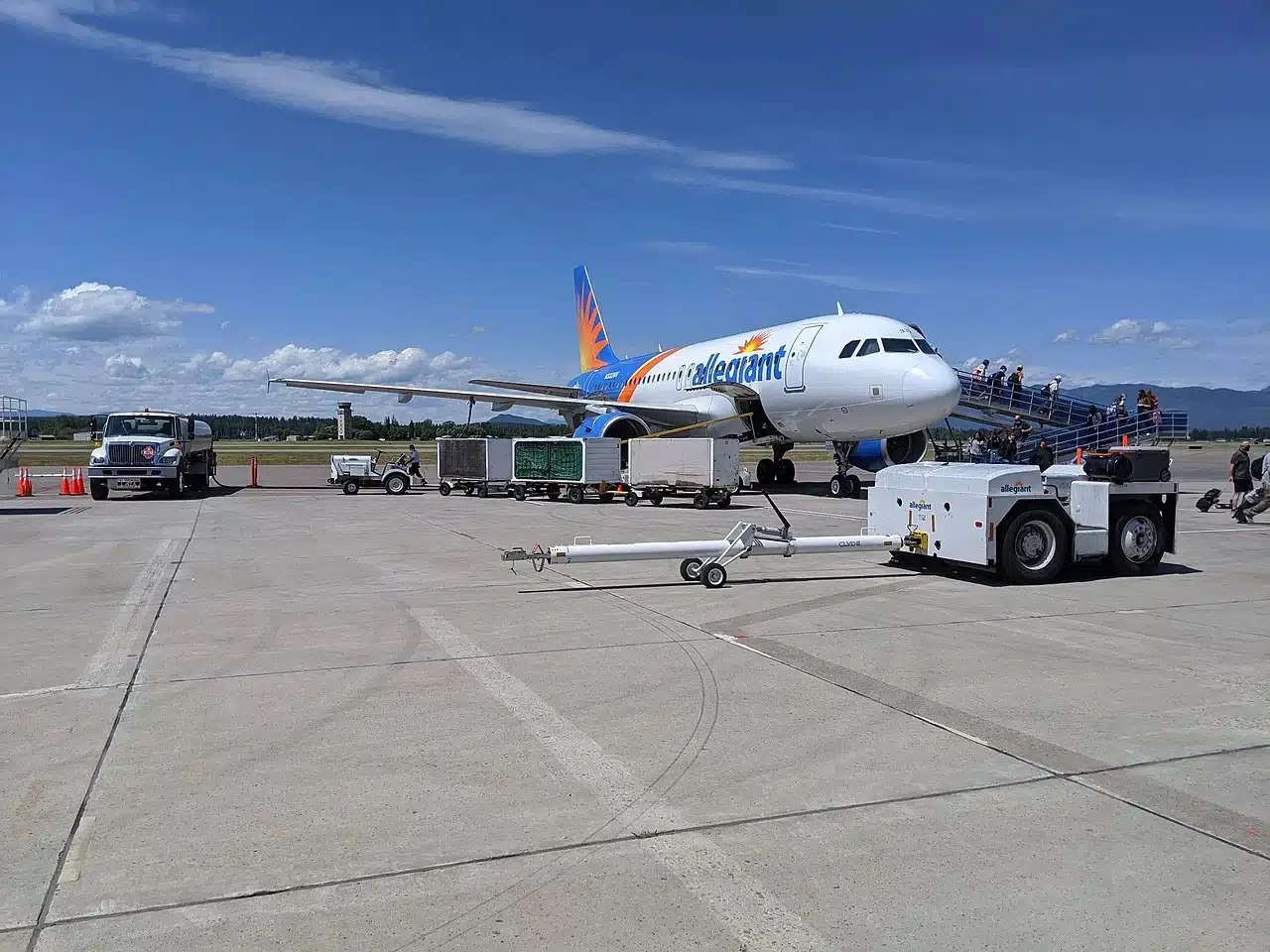
Allegiant doesn't really have any hub airports. There aren't any airports where you'll see a large number of Allegiant planes dominating a terminal.
However, they have a number of operating bases around the country with the most significant being Grand Rapids, Indianapolis, Las Vegas, Nashville, Orlando/Sanford, Phoenix/Mesa, Provo, and St. Petersburg/Clearwater.
Route Network Overview
Their main focus is flying between cold weather states and warm weather destinations.
As already mentioned, Allegiant focuses on serving secondary destinations. If they do have to fly into major cities, they often avoid the primary airport like in Phoenix, they use Mesa Gateway Airport instead of Phoenix Sky Harbor International Airport.
The flights offered by Allegiant are usually shorter in length than the typical airline. They don't have a direct coast to coast flight. However, they operate in just about every state, although not easily accessible destinations since they do mostly fly to underserved areas without any airline competition.
Allegiant Air offers no international flights. However, one caveat is that they do fly to destinations close to the Canadian border, in an effort to get Canadians over the border looking for ultra low cost fares.
Allegiant operates a mixed fleet of newer Boeing 737 Max 8s and older Airbus A320s. Their planes are configured in high density layouts (a characteristic of ultra low cost carriers). You can learn more about Allegiant's Boeing 737 Fleet by watching our reel here.
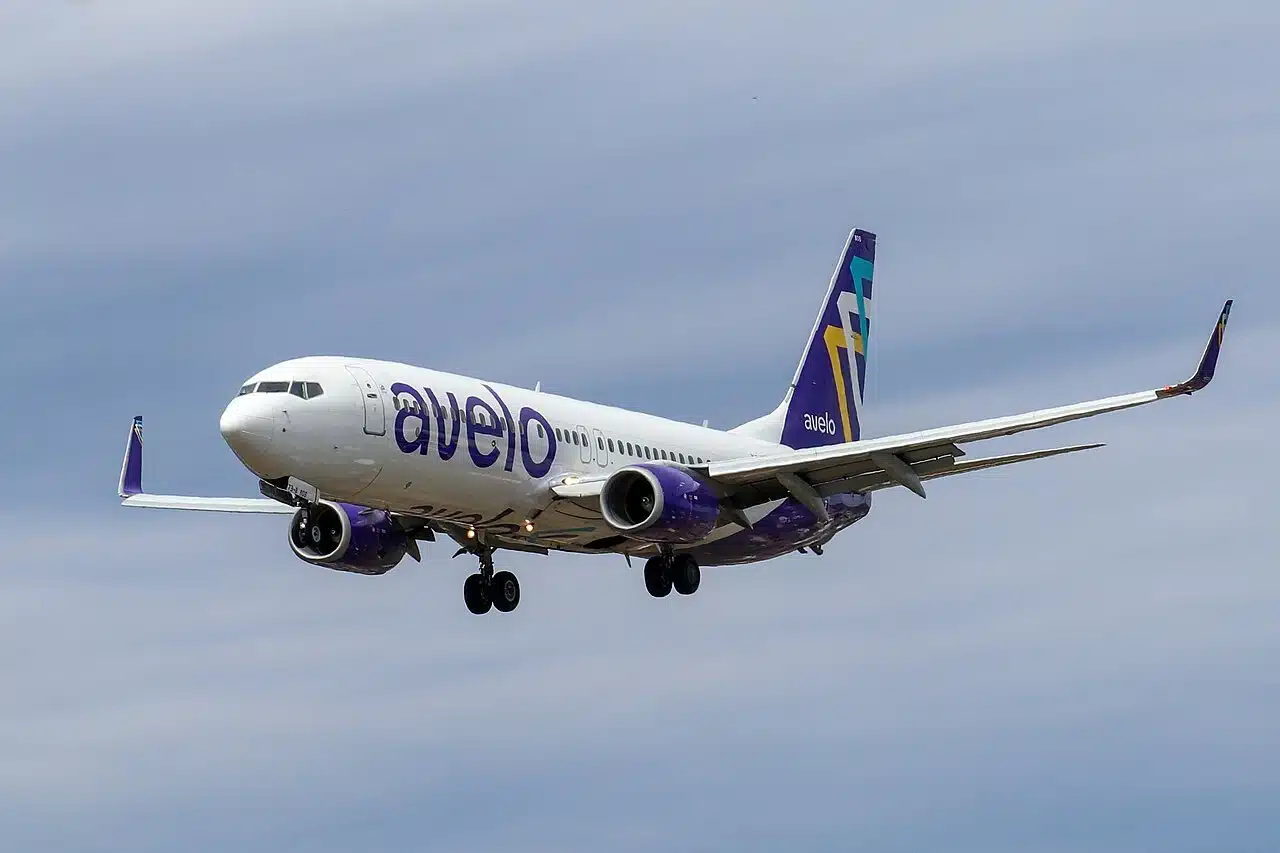
Avelo's main value proposition is connecting underserved secondary markets on the east coast. Avelo during its inception during the early 2020s had nationwide coverage but has since consolidated its footprint to the East Coast.
They provide cheap flights outside of busy international airports in the Northeast to popular tourist destinations in the South. They also have connections to several international destinations found right outside U.S borders like Jamaica and Cancun.
Where are the major hubs?
Avelo doesn't technically operate hubs but rather operating bases. But if you look at their route map you'll notice that the bulk of their flights are coming from Tweed - New Haven Airport in Connecticut. Wilmington, Delaware and Charlotte, North Carolina are the next two largest operating bases for the airline.
One thing to note is that outside of Charlotte, Avelo is flying from secondary airports outside of major metropolitan areas.
Route Network Overview
Avelo flies mostly on the East Coast to underserved or secondary cities down South. They fly point to point flights, which benefits customers as it eliminates the need for connecting flights as well as lessens the chances of lost baggage and other customer complaints coming up.
Another benefit of flying from underserved airports is that Avelo is usually competing against limited competition. For example, at New Haven they are the only airline carrier flying from that airport. There are no delays due to traffic meaning they keep customers happy by getting off the ground without a hassle.
Avelo relies on a single aircraft type in their fleet which is the Boeing 737. Their Boeing 737s are somewhat older in age. They are configured in a high density layout, which means getting as many passengers as you can on the plane without sacrificing safety.
However, the airline is planning on growing beyond the Boeing 737. In 2025, Avelo announced they were going to be acquiring the Embraer 195-E2. This airplane fits right between a smaller regional jet and a standard Boeing 737. This works perfectly for Avelo as right now, they are just focusing on the East Coast, featuring destinations that are well within the range of this new plane type.
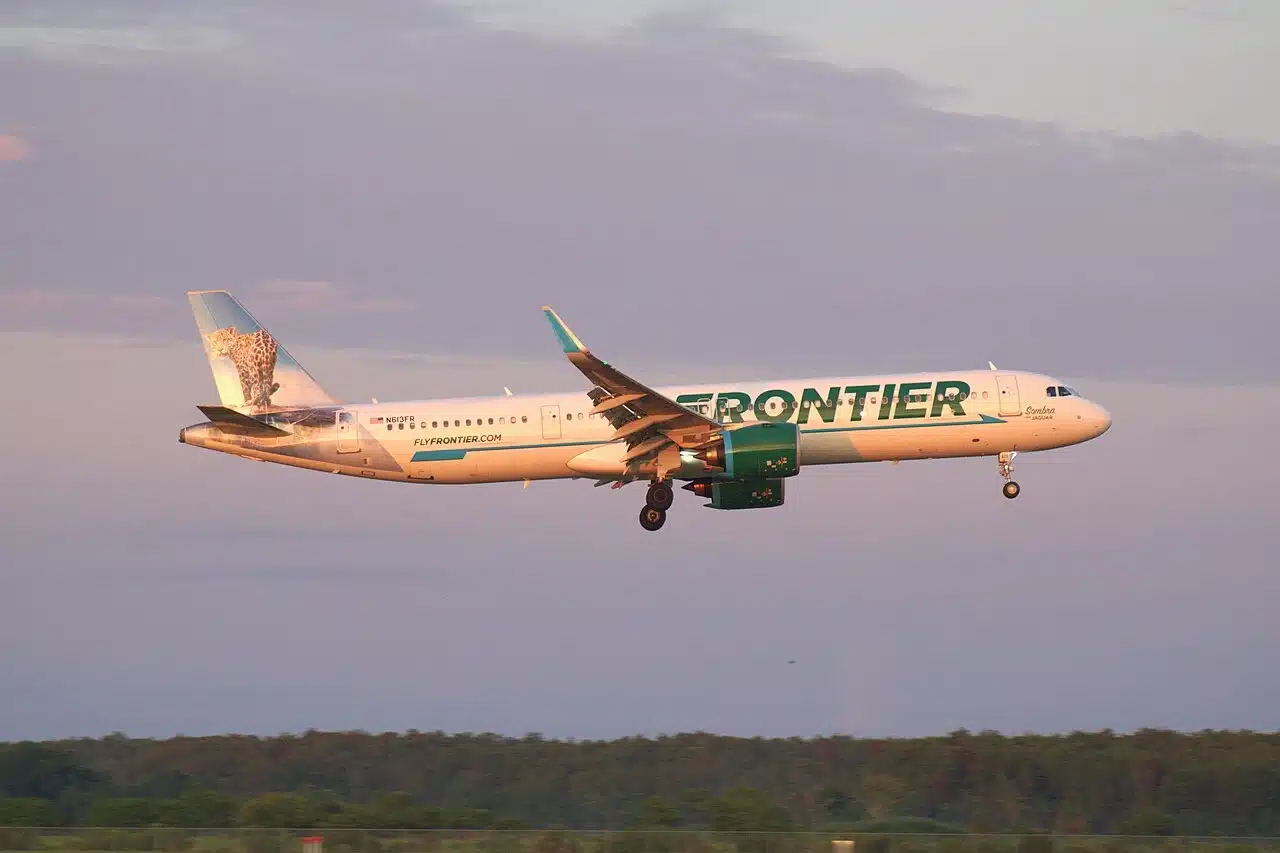
Frontier Airlines is now the premiere ultra low cost carrier here in the United States. They have coast to coast service with many airports having some sort of Frontier presence.
The airline is a very cost conscious airline. Their mindset behind that is that if they are able to reduce operating costs as much as possible, that will trickle down to the customers. They charge very low fares however, they are known for charging some of the steepest fees.
Frontier is working on changing that perception as now they are focusing on driving quality for the customer. They've come up with fare bundles of various perks like picking your seat, etc to help pad their bottomline and also giving passengers the ability to pick their fare structure. They also are adding premium economy seating arrangements to their flights, something never really seen before on a ultra low cost carrier here in the United States.
What is the value proposition?
Frontier Airlines is now the premiere ultra low cost carrier here in the United States. They have coast to coast service with many airports having some sort of Frontier presence.
The airline is a very cost conscious airline. Their mindset behind that is that if they are able to reduce operating costs as much as possible, that will trickle down to the customers. They charge very low fares however, they are known for charging some of the steepest fees.
Frontier is working on changing that perception as now they are focusing on driving quality for the customer. They've come up with fare bundles of various perks like picking your seat, etc to help pad their bottomline and also giving passengers the ability to pick their fare structure. They also are adding premium economy seating arrangements to their flights, something never really seen before on a ultra low cost carrier here in the United States.
Where are the major hubs?
Frontier's major hubs are Atlanta and Denver. These are some of the largest airports here in the United States. From both, just about every region of the country is touched by a Frontier flight. Giving customers coast to coast access at a fraction of the cost flying with a domestic carrier.
Route Network Overview
As mentioned above, Frontier does provide coast to coast coverage of flights for its customers. They also provide flights internationally to Mexico, Central America and the Caribbean.
Frontier also doesn't shy away from flying from major airports in the United States, unlike the Allegiant's and Avelo's. Frontier is making rather large pushes throughout the country now that its main competitor Spirit Airlines is going through restructuring. Most recently, Frontier has grown its presence in the New York City area.
Frontier is known for flying a relatively new fleet of planes. They operate Airbus A320s and Airbus A321s. Their planes are configured in a high density layouts however, it appears that they will be straying away from that as they will devote cabin space to have a premium economy section with added legroom.
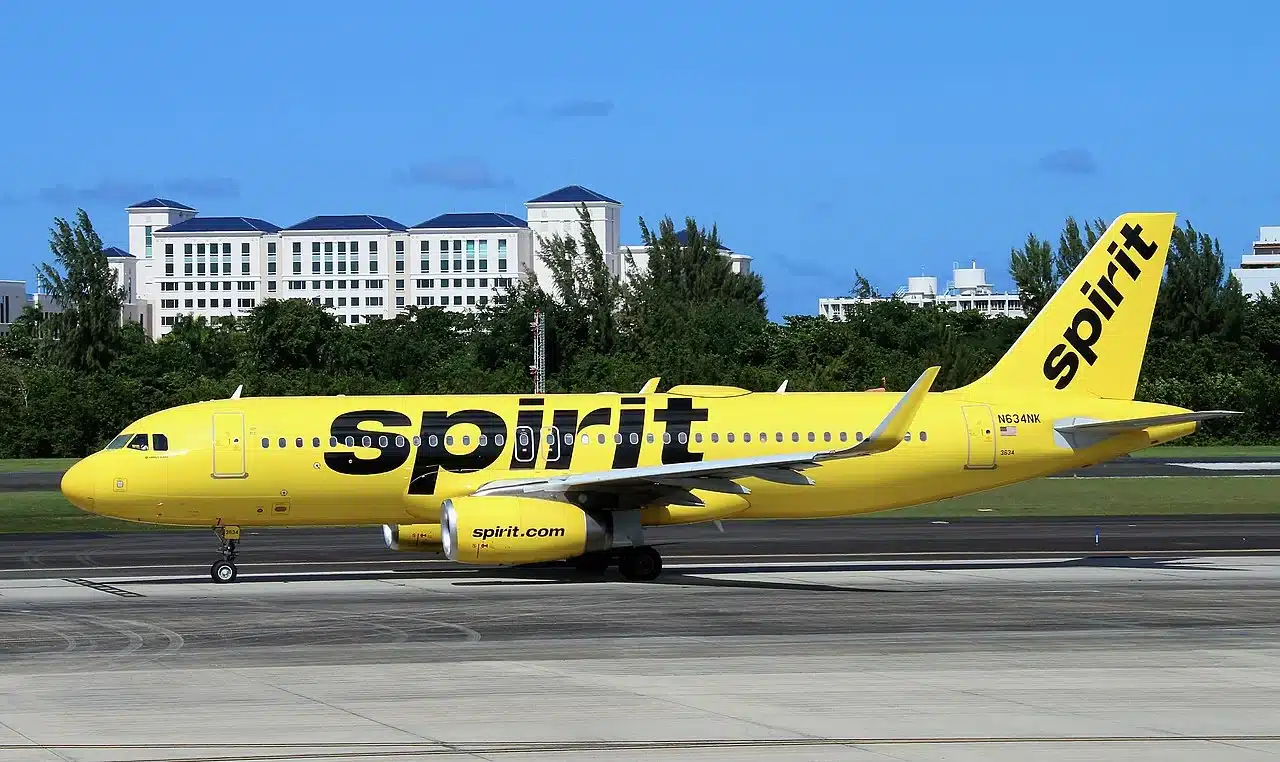
For a long time, Spirit Airlines was the first airline you thought of for cheap low fares here in the United States. For a long time, that was true. They did charge fares that were on par with Frontier Airlines. However, they did have a slightly better perception when it came to fees for extra creature comforts on flights. The area of bad perception of Spirit was the quality of passengers that flew on Spirit.
However, in recent years Spirit tried to improve the quality of its product. It offered a premium economy style product called "Big Seat" which provides customers with extra leg room.
Right now, the airline is going through restructuring after filing for bankruptcy protection in 2024. While the future is uncertain, Spirit continues operating flights and their role in keeping ULCC competition strong remains important for keeping fares low industry-wide.
Spirit's primary crew base is Fort Lauderdale, Florida. They also have significant presences in Detroit, Atlanta, Dallas, Chicago and Las Vegas. Learn more about Spirit's hubs here.
Spirit also has a small hub at Atlantic City. Their service from Atlantic City stems from their founding in the 1980s. You can learn more about Spirit's service from Atlantic City here.
Route Network Overview
Spirit Airlines flies to just about every state in the continental U.S. They use a true hub and spoke model, meaning that the bulk of their flights depart out of their hubs. For example, Spirit has a New York - LaGuardia - Detroit flight (one that we flew and reviewed - check it out here).
They also offer an array of international flights. Spirit has service to Mexico, Central America, South America, and the Caribbean.
Spirit operates a fleet of Airbus A320 family aircraft. For a long time they flew the Airbus A319 which is smaller of the variants, however, those were all retired. Right now, they are relying on the Airbus A320 and A321.
Sun Country Airlines is a niche ultra low cost carrier. They are niche in the sense that an overwhelming majority of their flights are from Minneapolis, Minnesota where the airline is based. Based on that alone, their value proposition is very similar to that of Allegiant Air and most other ultra low cost carriers which is getting people from cold weather climates to the warmer vacation destinations of the U.S.
Where are the major hubs?
Sun Country's major hub is at Minneapolis St. Paul International Airport. They also have been expanding their business from Cincinnati, however this is due to Sun Country having a contract to conduct cargo flights for Amazon Air.
Route Network Overview
Just about all Sun Country flights originate from Minneapolis. From Minneapolis, Sun Country offers many flights to most of the entire continental United States. However, just note there aren't any transcontinental routes, like flights between New York and Los Angeles.
All of Sun Country's planes are Boeing 737s. They are configured in a high density seating layout like most ultra low cost carriers. Sun Country does not have any premium seating arrangements as of yet.
More recently, Sun Country has upgraded their fleet from older Boeing 737s to the Boeing 737-900ER. They are still older by today's standards but at least they're shifting away from using Boeing 737s from the late 1990s early 2000s.
- Newark (EWR): Spirit, Frontier - New York area: Spirit from LaGuardia, Frontier from JFK - New Haven (HVN): Avelo (primary base) - Atlantic City (ACY): Spirit, Allegiant - Learn about Spirit's Atlantic City service
Where Each ULCC Focuses Geographically
- Spirit: Strong East Coast presence, Florida-focused - Frontier: True nationwide coverage, strong in Denver and Atlanta - Allegiant: Secondary airports near cold-weather cities connecting to Vegas/Florida - Avelo: East Coast secondaries (Connecticut, Delaware, North Carolina bases) - Sun Country: Minneapolis radiating outward
Pro Tip: If you live near a smaller regional airport, check Allegiant or Avelo first. They specialize in serving airports the big carriers ignore.
Which ultra low cost carrier should you choose?
Virtually all ultra low cost carriers offer the same product here in the United States. However, there are only very specific details that separate them from each other as well as serving as a better option to travel with them versus another. Really, the only separating factor is your travel style and the route network the airline provides.
By Travel Style
If you are flying for a leisure vacation then Spirit, Allegiant, Sun Country might be the better options for you, as that's who these airlines are catered to. If you're looking for a service closer to what you may expect on a low cost airline like Southwest or JetBlue, Frontier at the moment might be your best choice.
By Route Network
Suppose you live in an underserved area where there are not many airlines offering flights to your local airport, you better check to see if Avelo or Allegiant are flying from there. For passengers looking to go down to Florida, then Allegiant or Spirit might be the best option for you. If you are in Minnesota, you'll likely go with Sun Country Airlines. However, a constant across the entire country would be Frontier, who flies coast to coast service.
Current Industry Trends
Spirit's Restructuring is Reshaping the ULCC Landscape
Frontier's introduction of premium economy seating and bundled fares represents a trend toward offering more choice. Spirit's "Big Seat" product follows this pattern. ULCCs are recognizing that while their core customer wants low fares, many are willing to pay for specific upgrades - creating a middle ground between traditional ULCC bare-bones service and legacy carrier pricing.
Latest ULCC Industry News & Updates
This section is updated monthly as new route announcements and industry developments occur.
- Spirit Airlines files for bankruptcy protection (continues operating) - Frontier emerges as dominant ULCC amid Spirit's troubles - Avelo consolidates operations to East Coast after West Coast retreat - Industry-wide fleet modernization trend continues
What to expect flying on an ultra low cost carrier?
The ULCC Business Model
The ultra low cost model works by keeping all operation costs as low as possible for the airline so they are able to charge the lowest amount for fares. But with these low fares come higher fees for most conveniences like checked or extra baggage or seat selection.
These airlines will put as many people they can safely cram on an airplane and remove all inflight entertainment to help keep costs down.
From an airline point of view, ULCC airlines tend to be very conscious about fuel savings. Airlines like Frontier will fly newer, more fuel efficient planes that tend to require less maintenance. However, other airlines like Allegiant historically, Sun Country, or Avelo, tend to use older planes to save on the upfront costs but usually get dinged when it comes to breakdowns or maintenance.
Tips for Flying ULCCs
- Book as early as possible to take advantage of promo fares. Most ultra low cost airlines offer discounted fares when they announce a new route or entrance into a new market. Fares are dirt cheap. - Plan accordingly for food and entertainment. Buying food on the plane is very expensive. Some of these airlines will allow you to bring outside food onto the plane. Also, pre-download your favorite movies and shows to keep you busy throughout the flight. - Pack lightly as possible. If you are planning on bringing suitcases upon suitcases for your trip, you may want to seek an alternative airline. ULCC's will fee you for excess baggage. - Patience - ultra low cost airlines are cramped, the quality of flyers might not be so great. So it's best to exercise patience.
When ULCCs Make Sense (And When They Don't)
Choose a ULCC when:
- You're flexible with flight times - You can travel with just a personal item (backpack) - You book well in advance - You're flying point-to-point (not connecting) - Price is your absolute top priority
Avoid ULCCs when:
- You need to check multiple bags (fees add up quickly) - You want seat selection included - You need schedule flexibility (change fees are steep) - You expect in-flight entertainment or meals - You're connecting to another airline (separate tickets create risk)
Frequently Asked Questions
What is the difference between a low-cost carrier and an ultra-low-cost carrier?
Low-cost carriers like Southwest and JetBlue include basic amenities (free snacks, carry-ons, entertainment) in their base fares. Ultra-low-cost carriers charge the absolute minimum base fare but charge separately for virtually everything else - checked bags, carry-ons, seat selection, drinks, and snacks. ULCCs are best for travelers who can pack extremely light and don't need extras.
Which ULCC has the most destinations?
Frontier Airlines offers the most comprehensive year-round network with 123 destinations and true coast-to-coast coverage, making it the largest ULCC by practical destination count and route frequency.
It depends on your needs. Frontier now offers more route options and is gaining market share as Spirit restructures through bankruptcy. Frontier also offers premium seating options and fare bundles. Spirit has a stronger presence in Florida and traditionally had a slightly better fee perception. For the most options in 2025, Frontier is likely your better bet.
Can you bring a carry-on bag on a ULCC?
Personal item: Yes, always free (must fit under the seat - typically a backpack or small purse)
Carry-on bag: You must PAY for this on all ULCCs. The fee varies by airline and when you purchase (cheaper online during booking, expensive at the gate). Expect $35-$65 for a carry-on bag depending on the carrier and timing.
Are ULCC flights safe?
Yes. All US airlines, including ULCCs, must meet the same FAA safety standards. ULCCs cut costs through operational efficiency, fees, and reduced amenities - not safety. Spirit, Frontier, Allegiant, Avelo, and Sun Country all maintain strong safety records.
When should I NOT fly a ULCC?
Avoid ULCCs if you:
- Need to check multiple bags (fees add up quickly) - Want seat selection included - Need schedule flexibility (change fees are steep) - Expect in-flight entertainment or meals - Are connecting to another airline (separate tickets risk issues)
ULCCs work best for simple one-way trips where you can pack in a personal item only.
This guide is maintained monthly with the latest ULCC route information, industry news, and network updates. Last updated: December 8, 2025
If you found this guide helpful please consider marking Your Weekend Travel as a preferred source on Google!
Table Of Contents
Share On Social Media
Share
Facebook
Twitter
LinkedIn
Email
Reddit
Sign Up to Get New Content Delivered To Your Inbox
By signing up, you agree to receive newsletters and promotional content and acknowledge the data practices in our privacy policy. You may unsubscribe at any time.