Southwest’s Unique Approach to Long-Haul International Service Makes Sense
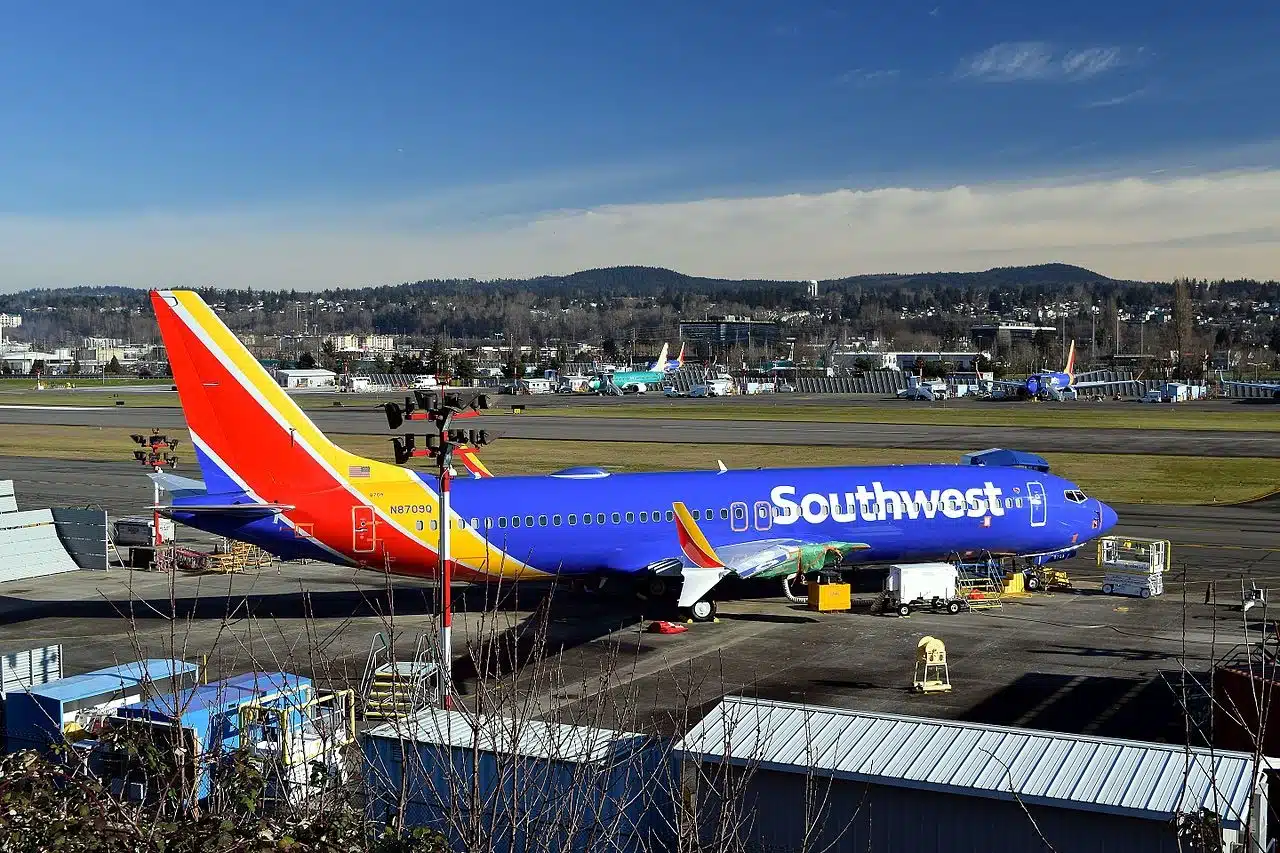
Southwest Airlines has signed several interline agreements to grow its international presence at the lower risk to the company as possible.

Allegiant Air is taking on JetBlue with new Boston-Fort Lauderdale flights. We break down what it means for fares and why Providence makes more sense.
Allegiant Air has built its business on the simple principle of not competing directly with other airlines. They’ve gone as far as largely avoiding competition at major international airports altogether, opting instead for sole market share ownership of secondary airports in major cities. Think Phoenix-Mesa Gateway over Phoenix Sky Harbor.
However, with Spirit Airlines now out of the picture and Allegiant’s recent moves in Fort Lauderdale, it appears that the airline might be testing out a new approach.
When Spirit filed for bankruptcy the first time, airlines rushed to grab market share in South Florida. JetBlue has been the most aggressive, boosting their operations from the airport. This time around, Allegiant has decided it can no longer afford to stay on the sidelines. Allegiant is jumping on to gain leftover market share from Spirit.
What makes Allegiant’s latest route announcement particularly interesting isn’t just that they’re adding Fort Lauderdale flights. These new routes are competitive ones, most notably the Boston and Fort Lauderdale route pairing.Both Boston and Fort Lauderdale are JetBlue strongholds.
Is Allegiant in over their head? What does this mean for passengers? Let’s dig in.

Allegiant already has a substantial presence in Florida, which isn’t surprising. Ultra-low-cost carriers tend to thrive on leisure routes since the lower yields make these routes unattractive to mainline carriers at volume, leaving room for ULCCs to operate at scale profitably, although with razor thin margins.
Fort Lauderdale is actually one of the larger airports in Allegiant’s network, and they’ve designated FLL as one of their bases of operation. But the bulk of their FLL flying originates from smaller, underserved cities across the East Coast and Midwest, very much in keeping with their core strategy.
According to Routelinq by Your Weekend Travel’s destination comparison for FLL as of May 2026, there is remarkably little overlap between Allegiant and the other low-cost carriers operating out of Fort Lauderdale. Stacked up against JetBlue, Southwest, and Frontier, Allegiant only goes head-to-head with Frontier on one single route: Cincinnati. For an airline operating out of one of South Florida’s busiest airports, that’s a remarkably clean competitive footprint.
It’s also worth noting that for Allegiant’s Florida operations, Orlando is more of the focal point than Fort Lauderdale:
| Airport | Unique Active Routes |
| Fort Lauderdale (FLL) | 8 |
| Orlando Sanford (SFB) | 60 |
| Total | 68 |
Source: Routelinq by Your Weekend Travel, May 2026
Orlando Sanford is the quintessential Allegiant airport. It’s a secondary airport serving a family-friendly destination with minimal competition.
Fort Lauderdale is quite the opposite. The potential customer segment is better tailored to snowbirds looking to beat the cold northeast winters, and Fort Lauderdale-Hollywood International Airport is a busy airport with plenty of competition. The fact that Allegiant is now looking to grow FLL makes sense given the Spirit-sized void sitting there, but it does put them in unfamiliar operational territory.
New Allegiant service from Fort Lauderdale is coming to Boston, Indianapolis, Kansas City, Omaha, and Pittsburgh this fall. These destinations aren’t Plattsburgh or Lansing. These are legitimate international airports, and several of them put Allegiant in direct competition with larger carriers. In some cases, multiple ones at once.
| Destination | Competing Carriers |
| Boston | Allegiant, JetBlue |
| Indianapolis | Allegiant, Frontier, JetBlue, Southwest |
| Kansas City | Allegiant, Southwest |
| Omaha | Allegiant, Southwest |
| Pittsburgh | Allegiant, JetBlue, Southwest |
What’s notable here is that Spirit didn’t operate any of these routes from Fort Lauderdale except Boston. So this isn’t Allegiant simply picking up where Spirit left off. This looks more like market experimentation.
Part of the explanation may lie in Allegiant’s growing corporate confidence following the Sun Country Airlines acquisition. The two carriers operated with remarkably similar cost philosophies, and the combined entity absorbed Sun Country’s cargo operation, which historically ran during the off-season months when leisure demand softened. As a business, Allegiant is simply larger and more diversified than it was before.
With Spirit gone, Allegiant has effectively stepped into the number two ULCC spot in the U.S. And right now, especially in Fort Lauderdale, the conditions are favorable for taking calculated risks the airline would have avoided in the past. In order to be credible as a Spirit successor and to restore some version of the “Spirit Effect” that kept fares honest across the industry, Allegiant is going to have to compete in markets that feel uncomfortable to them.
Cranky Flier has already predicted that Allegiant is positioning itself to fill this role, though with the caution that the airline could face a similar fate as Spirit. From our perspective, that’s a stretch. Allegiant’s business model is fundamentally different from Spirit’s: leaner, more focused, and less reliant on the razor-thin margins that contributed to Spirit’s collapse. It’s difficult to imagine Allegiant applying this aggressive route approach across its entire portfolio the way Spirit did. The case study already exists for why that doesn’t work.
Of all the new routes, Boston is the one that raises our eyebrows. Logan is a primary focus city for JetBlue and they run four daily roundtrips between Boston and Fort Lauderdale. When Allegiant enters the market this October, they’ll be operating three times per week.
According to Routelinq by Your Weekend Travel data, Spirit was running multiple daily flights in each direction on this route before they went under, output far more comparable to what JetBlue is doing. Allegiant, at three weekly frequencies, isn’t even approaching that scale.
On a flight-by-flight basis, Allegiant will likely do fine. Expect full planes. But the route’s long-term viability is a different question. JetBlue’s connectivity into Logan and into FLL gives them a passenger catchment area Allegiant simply can’t match.
Travelers who need to fly on a specific day will default to JetBlue. Allegiant will capture the flexible, price-sensitive segment, but at three flights a week, there’s real revenue being left on the table.
Price is the one lever Allegiant can pull:
| Airline | One-Way Economy Fare, BOS–FLL, October 1, 2026 |
| Allegiant | $79 (introductory) |
| JetBlue | $164 (Core Economy) |
That’s a meaningful gap, but the fare comparison doesn’t exist in a vacuum. JetBlue’s Core Economy comes with in-flight entertainment, complementary snacks, and some of the most generous legroom in U.S. economy class. Allegiant offers none of that. For a price-sensitive traveler flying light with no schedule constraints, Allegiant makes sense. For most people traveling between Boston and Fort Lauderdale, JetBlue remains the more compelling total value.
Our read is that this particular route is a market test. Allegiant is prodding a major corridor to see how it responds to ULCC disruption the way it once responded to Spirit.
There will absolutely be takers. But challenging a low-cost carrier on a route connecting two of its primary focus cities, with a fraction of the frequency and none of the amenities, is a difficult position to defend long-term.
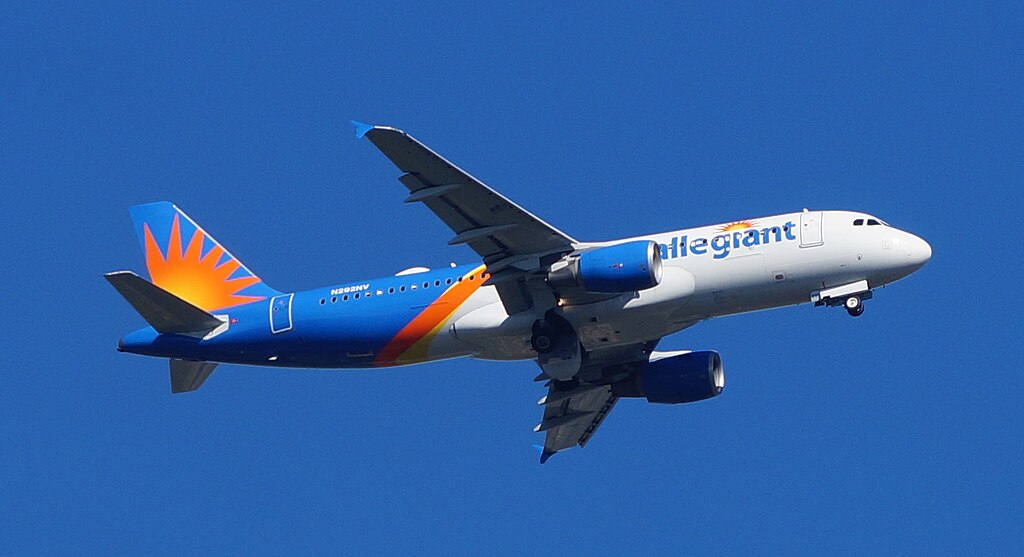
Allegiant was right to target Fort Lauderdale growth. They had an existing footprint there, a void opened up, and the timing was favorable. However, competing with JetBlue head to head in Boston, however, is where things get questionable.
If the goal is capturing New England travelers heading to South Florida, why fight JetBlue at Logan, one of their strongest hubs, when Providence is sitting right there?
JetBlue operates just two daily flights between Fort Lauderdale and Providence. According to BTS data, those flights generated an 84% load factor, moving approximately 5,800 passengers in both directions over the course of the year. The demand is real and JetBlue is proving it.
Meanwhile, the cheapest available fare on that route for October 1st, 2026 is $234 on JetBlue. If Allegiant came in at their introductory $79 price point, they’d be undercutting JetBlue by nearly three times, and the ripple effect on Boston-area fares would likely follow given that Providence sits only about an hour from Logan.
Providence is also structurally the kind of airport Allegiant was built for. It’s a secondary reliever market with real demand, limited competition, and no dominant incumbent.
Southwest also provides some limited service on the route, but JetBlue owns it. Coming in with aggressive ULCC pricing at a secondary New England airport is the Allegiant playbook executed correctly. Going toe-to-toe with JetBlue at Logan is not.
Allegiant Air is making the right moves in Fort Lauderdale directionally. The void Spirit left is real, the timing is right, and the airline has the corporate momentum to take some calculated risks. Not all of those risks are created equal, though.
The Boston route will likely fill seats since Allegiant’s low fares will see to that. But filling seats three times a week isn’t the same as owning a market. JetBlue offers too much value at a competitive enough price for this to become a scalable, long-term route for Allegiant. Our best guess is this one runs seasonally and quietly steps back.
Providence would have been the smarter play. It likely sports better economics, better competitive positioning, and a realistic shot at delivering the kind of fare pressure the Boston market hasn’t seen since Spirit went dark. That opportunity is still on the table.