A Glimpse at Alaska’s Boeing 737-900ER Product
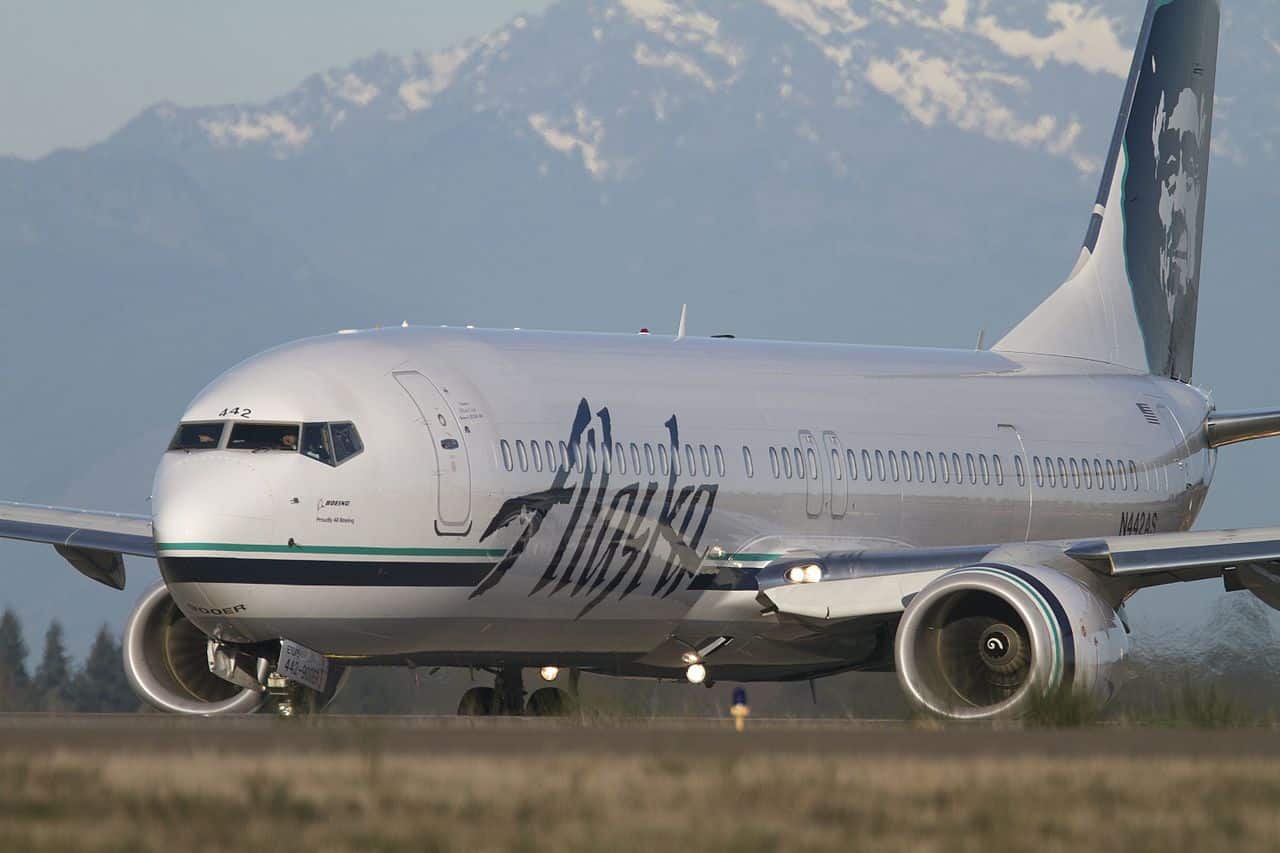
The Boeing 737-900ER is a workhorse for Alaska Airlines. Learn more about the routes it flies on as well as the cabin experience, and much more.

JetBlue’s transatlantic ambitions are draining a struggling airline. We break down the load factor data and make the case for a domestic-first reset.
It’s no secret that JetBlue has been on a downward spiral for years now. Recently, the airline has been rumored to be exploring potential suitors for an acquisition. With fuel costs further strained by the ongoing Iran War, which has sent oil prices surging across global markets and putting pressure on the entire airline industry, JetBlue’s CEO Joanna Geraghty has made clear they are not considering bankruptcy protection. They’re opting to either freeze employment, slash their network, or take unspecified further action.
Their JetForward initiative, designed to return the airline to profitability, isn’t panning out the way they hoped. The bleeding won’t stop. The airline just posted a 1.8% increase in operational losses year over year. It’s been painful to watch, especially as a native New Yorker who has flown JetBlue since the early days.
While many of their issues are beyond their control, like engine reliability problems affecting both the Airbus A320 and A220 fleets, there are decisions the airline has made that genuinely make you scratch your head. Expanding into transatlantic flying is one of those.
You can almost trace JetBlue’s decline alongside their pivot toward transatlantic routes. Have they lost focus? Would cutting that service right the ship? Let’s take a deeper look at both sides of the argument.
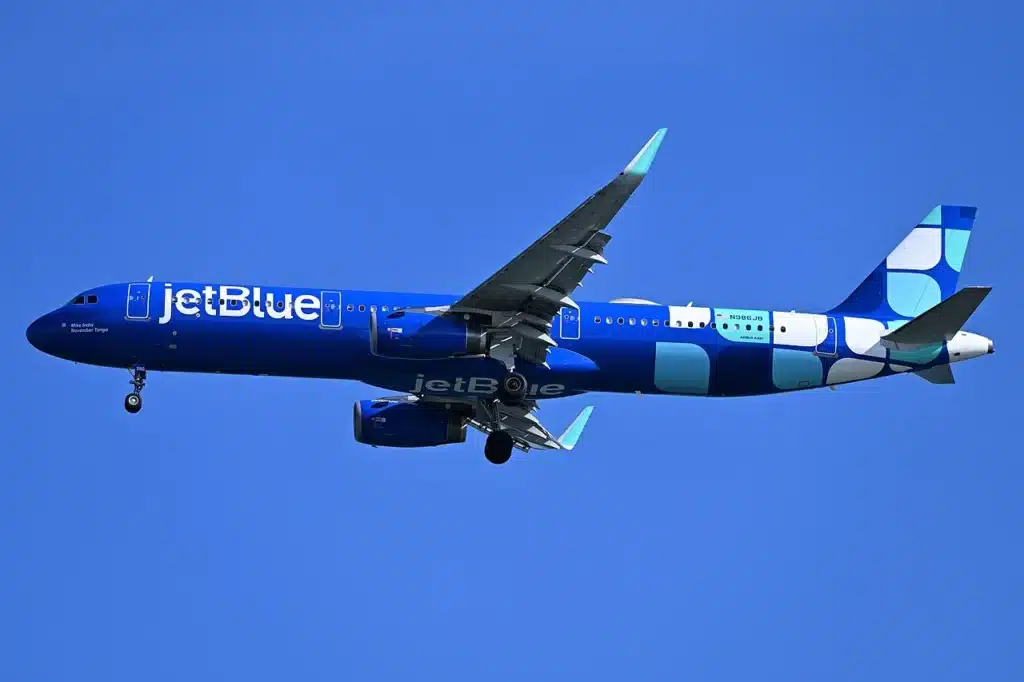
JetBlue launched transatlantic service right on the heels of the pandemic in 2021. Financially, the airline hasn’t come close to matching their pre-pandemic performance since.
| Year | 2019 | 2020 | 2021 | 2022 | 2023 | 2024 | 2025 |
| Net Income | +$569M | -$1.4B | -$182M | -$362M | -$310M | -$795M | -$602M |
To be fair, JetBlue hasn’t been fighting just one battle. Labor mismanagement, the pandemic, rising fuel costs, and fleet grounding issues have all piled on. But launching transatlantic flights right at the cusp of pandemic recovery raises a real question. Did they think it was going to stem the bleeding at the time?
Transatlantic long-and-thin flying was a legitimate market opportunity back then. Americans routinely pay premium fares to fly across the pond on Delta, United, and American. JetBlue likely bet that travelers would flock to a low-cost alternative offering comparable in-flight hospitality.
While overall performance has been stable up to present day for the most part, there is a fundamental lack of scalability with this product line, and the reason is straightforward.
Passengers don’t want to fly transatlantic on a narrowbody. Given the choice between a widebody and JetBlue’s A321LR, most travelers, especially on high-yield city pairs, will opt to take the widebody every time. That’s exactly what Delta, United, and American are flying on these routes. Delta has even openly stated they will never fly a narrowbody on a transatlantic route.
History hasn’t been too kind to low cost transatlantic travel as well. Norwegian Air Shuttle burned through the capital trying to make it work. Play Airlines failed and Norse Atlantic Airways has struggled to find sustainable footing.
The numbers tell the story clearly. The table below compares JetBlue and Delta Air Lines, JetBlue’s most direct legacy competitor out of New York-JFK and Boston-Logan, on transatlantic route performance for January 2026. Columns represent total seats offered, seats filled, and load factor.
| Route | Airline | Seats Offered | Seats Filled | Load Factor |
| BOS–AMS | JetBlue | 2,760 | 1,691 | 61.3% |
| BOS–AMS | Delta | 15,734 | 13,737 | 87.3% |
| BOS–LHR | JetBlue | 8,142 | 5,870 | 72.1% |
| BOS–LHR | Delta | 16,852 | 10,562 | 62.7% |
| BOS–CDG | JetBlue | 8,280 | 6,064 | 73.2% |
| BOS–CDG | Delta | 16,859 | 14,744 | 87.5% |
| JFK–LHR | JetBlue | 16,372 | 12,504 | 76.4% |
| JFK–LHR | Delta | 27,633 | 21,833 | 79.0% |
| JFK–CDG | JetBlue | 8,280 | 6,392 | 77.2% |
| JFK–CDG | Delta | 30,487 | 28,127 | 92.3% |
JetBlue only beats Delta on one shared route: Boston to London Heathrow. Everywhere else, particularly out of JFK, Delta wins decisively on load factor. And while JetBlue’s numbers outside of Boston-Amsterdam aren’t terrible, load factor alone doesn’t tell the full story.
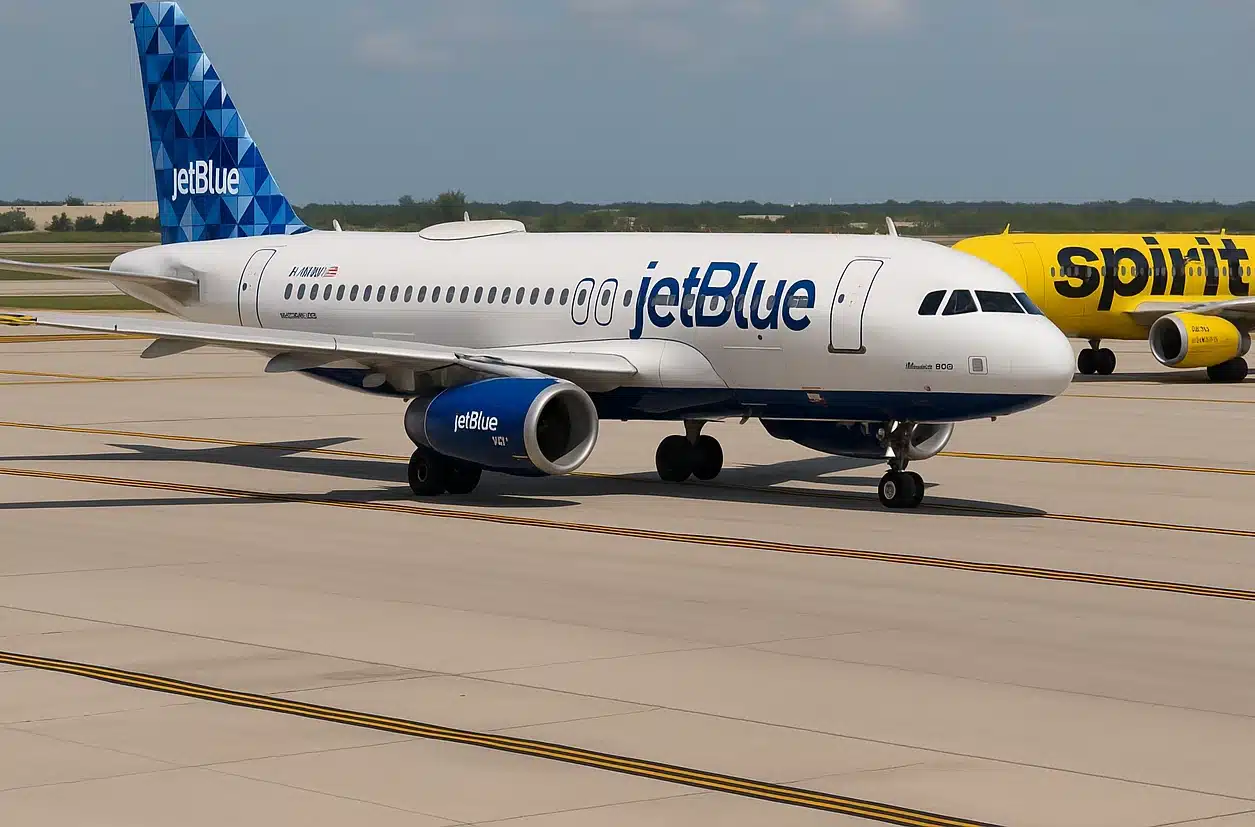
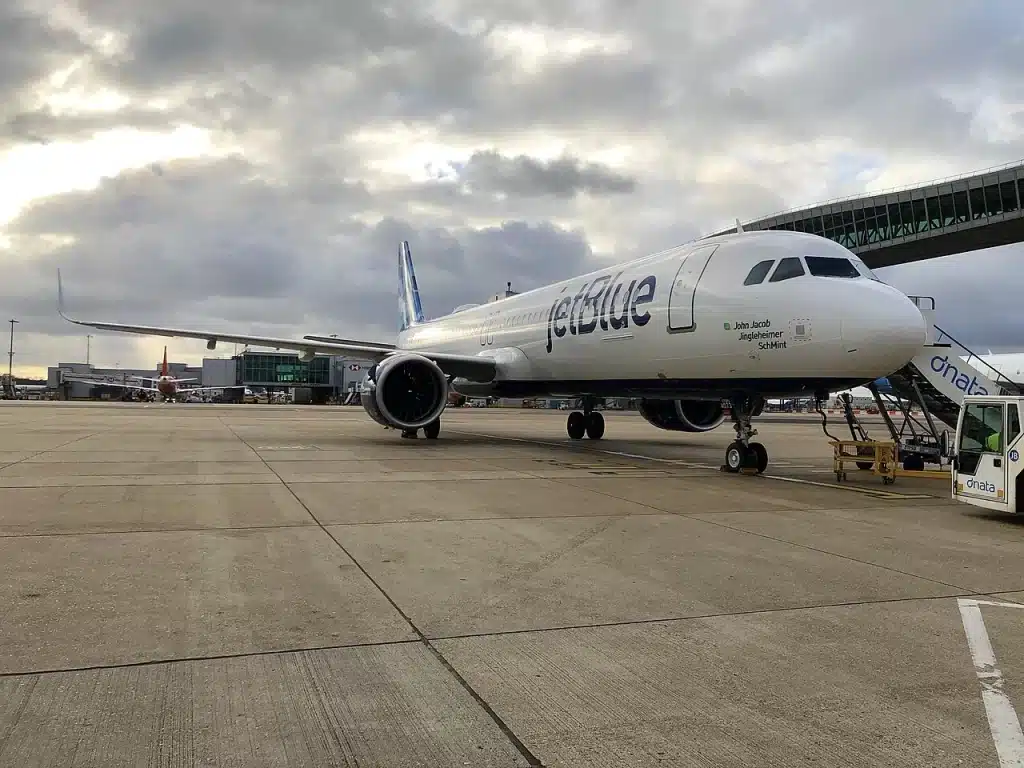
Delta operates widebodies on these routes, moving two to three times as many seats, likely with fewer departures, and with far more premium cabin inventory. Meanwhile, JetBlue’s Mint-equipped A321s are virtually the same aircraft doing domestic duty stateside. Every transatlantic departure leaving Boston at 61% load factor is a plane that could be flying a high-yield domestic route like Boston to Los Angeles, where the economics would be considerably stronger.
Factor in the cost of maintaining landing slots at London Heathrow and Amsterdam Schiphol, some of the most expensive in the world, and the math gets even harder to justify.
All of this points toward a straightforward conclusion. JetBlue would be better served consolidating their A321 fleet on high-yield domestic routes. That strategy would also position Mint as a direct competitor to United’s upcoming Coastliner product, a fight JetBlue actually has a chance to win.
There is no realistic scenario where JetBlue outpaces the legacy carriers on premium transatlantic routes. Secondary European cities might be a different story, a lane JetBlue appears to be moving into with their recent transatlantic destination announcements. But while the airline is desperately trying to stop the bleeding, going back to their roots looks like the smarter play.
If there is a plausible case for exiting transatlantic, why haven’t they pulled the trigger? The honest answer is probably that they’re using it as a bargaining chip.
Reports from just a few weeks ago indicated JetBlue had analysts quietly evaluating acquisition feasibility. If you’re trying to attract a buyer, keeping your most attractive assets visible makes sense. Three airlines have been floated as potential suitors: United, Southwest, and Alaska.
Southwest has made no secret of its international ambitions. A year ago they were filing for operating certificates to fly to Europe, and their long-term goal is to become a more credible rival to Delta and United. Acquiring JetBlue would instantly expand their international footprint across Europe, Latin America, and the Caribbean.
But this deal makes very little practical sense. Southwest is an all-Boeing airline. JetBlue flies Airbus. Merging those two fleets runs directly against Southwest’s foundational philosophy of fleet standardization. It’s hard to see them making that tradeoff.
Alaska Airlines is a more intriguing candidate. They’ve become an increasingly serious competitor to Delta, broken out of their Pacific Northwest roots, and recently added international service through their acquired Hawaiian Airlines Boeing 787 fleet. Growing their European presence further would be a natural next step, and acquiring JetBlue’s transatlantic operation could accelerate that.
Still, the same fleet incompatibility problem surfaces. Alaska shed their Airbus aircraft after acquiring Virgin America and has largely committed to Boeing. Taking on JetBlue’s Airbus-heavy operation would create real headaches.
United remains, in our view, the most logical acquirer, and we’ve written all about that before. Their Coastliner A321 product mirrors JetBlue’s current domestic operation almost exactly. United is also moving into long-and-thin transatlantic routes, including secondary European destinations like Split and Madeira, which JetBlue has been working on as well.
But United probably doesn’t need JetBlue. They’re already taking delivery of Airbus A321XLRs to serve those secondary markets. JetBlue was supposed to receive the XLR before their order was delayed. JetBlue’s current A321LRs would be redundant to United’s plans, not additive.
Every time we write about JetBlue, we end up saying the same thing: fix the domestic product first. Transatlantic flying is a distraction the airline can’t afford right now.
The counterargument is that JetBlue has invested so heavily in European infrastructure that walking away would waste it all. But that’s not truly accurate. JetBlue already operates a robust Latin American and Caribbean network that could absorb some of those A321LRs.
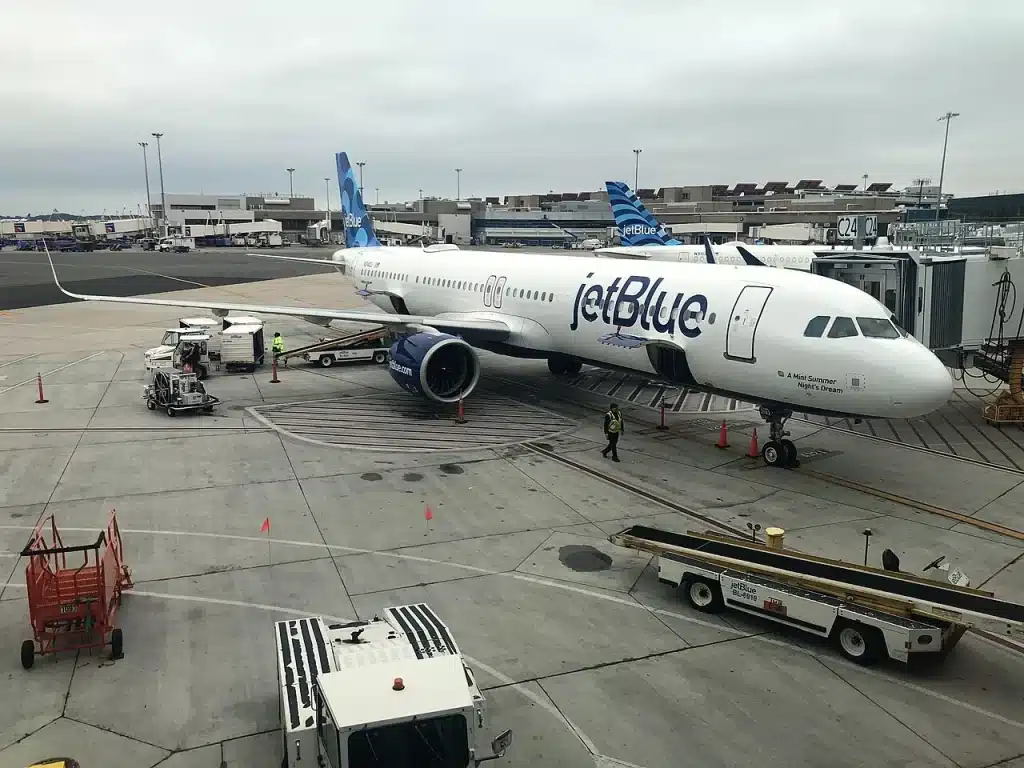
The complication is cabin configuration. Roughly half the cabin is set up for Mint, which won’t sell well on leisure-heavy routes. That means either downgrading the planes back to high density economy cabins or taking United’s approach and deploying them on high-yield domestic city pairs. JetBlue has recently leaned toward the latter with their domestic Mint product, which is the right instinct.
The bottom line is that JetBlue’s situation won’t be reversed without real sacrifice. Planes need to be deferred or reconfigured. Routes need to be cut. But before any of that, the airline has to answer a fundamental question: are they a domestic leisure carrier, or a premium transatlantic airline? They can’t be both effectively, and trying to straddle that line is part of what’s gotten them here.
JetForward just hasn’t delivered the results it promised. Q1 2026 results showed an operational loss of $224 million, a 1.8% increase year over year. The airline has been handling this problem with kid gloves. It’s time to take them off.