JetBlue Routes Between Guyana and the USA
JetBlue Airways offers one flight between the United States and Guyana. Learn everything you need to know about this route.

Southwest is abandoning O’Hare and Dulles. We break down why the moves backfired and why JetBlue is best positioned to capitalize on the void.
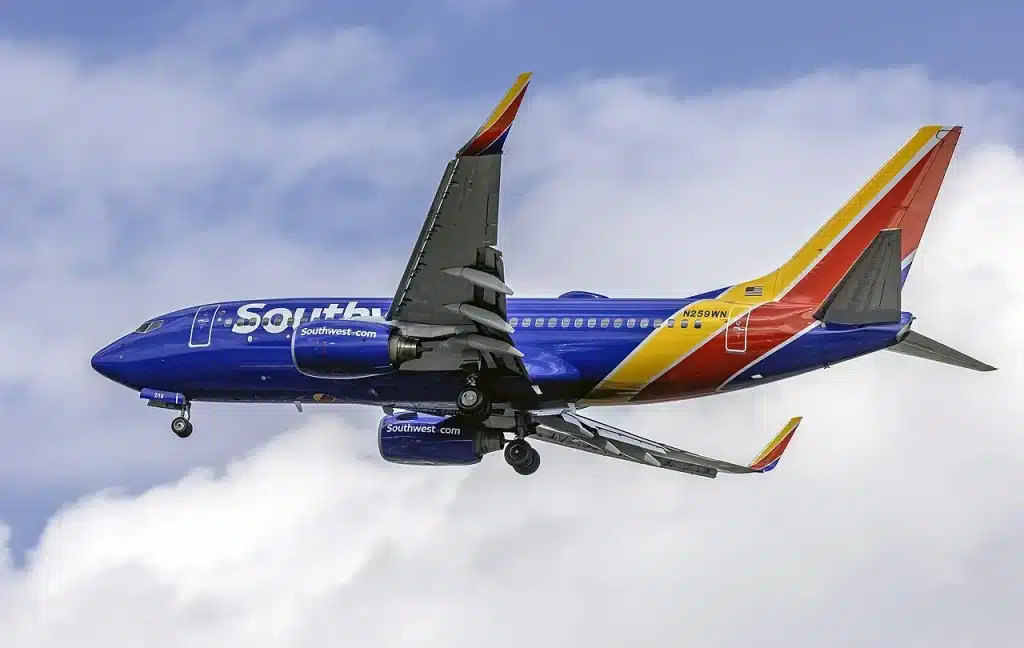
Southwest Airlines has made two notable retreats in the past two weeks. It’s pulling out of Washington-Dulles and Chicago O’Hare. On the surface, it doesn’t sound like a big deal. Southwest built its entire strategy around secondary airports. Chicago-Midway and Baltimore are their bread and butter. So this looks like the airline returning to standard operating procedure.
But Southwest didn’t walk away from Dulles and O’Hare for no reason. At one point, the airline thought both airports were critical to have. But the real focus isn’t why they left but who’s going to fill the small void they left behind.
Two Southwest competitors stand out: Alaska Airlines and JetBlue. Both have historically been stuck on their respective coasts. Both have real gaps in the Midwest and are building up their business traveler market. As it stands today, one of these Southwest competitor airlines is clearly better positioned to make a move.
Southwest’s identity is largely tied to Chicago-Midway and Baltimore. Both are considered the region’s secondary airports. Both also fit Southwest’s point-to-point model perfectly. But SWA at some point saw value in expanding operations to each respective region’s primary airport.
At Dulles, the motivation was Washington-National’s perimeter rule. DCA has strict restrictions on nonstop flight range. Dulles had no such limitations, giving Southwest a runway to serve longer-haul West Coast routes without running into regulatory walls.
At O’Hare, it was a capacity problem. Midway is a small airport. It has short runways, tight taxiways, and operational infrastructure that makes scaling up volume genuinely risky. O’Hare served as an overflow valve.
Both ORD and IAD also offered something Southwest wasn’t getting from their “primary” secondary bases: heavy international traffic, business demand, and access to the large cost conscious student populations feeding the region’s universities. On paper, the logic to expand to the international airports held. In practice, the flaws caught up with them.
Chicago O’Hare is dominated by United and American. Both airlines have been aggressively jockeying for market share there as of late, and the collateral damage has been every smaller carrier trying to hold on. The numbers tell the whole story:
Passenger Stats By Carrier at ORD — 2025
| Airline | Market Share | 2025 Total Passengers |
| United Airlines | 48% | 15,128,438 |
| American Airlines | 27% | 8,443,777 |
| Southwest Airlines | 1.77% | 562,210 |
At under 2% market share, Southwest was essentially a rounding error at one of the busiest airports in the world. And without a competitive business class product, they had no real lever to pull to change that.
United and American own business travel at O’Hare. Southwest isn’t putting up a leisure travel product there either, not when Midway is right there.
Passenger Stats By Carrier at MDW — 2025
| Airline | Market Share | 2025 Total Passengers |
| United Airlines | 0% | 0 |
| American Airlines | 0% | 0 |
| Southwest Airlines | 85% | 8,528,421 |
Midway is Southwest’s airport, full stop. It has the point-to-point routes, the leisure destinations, and the secondary market connections that Southwest actually does well. Southwest’s ambitions at O’Hare were a bit fuzzy from the start.
In the DMV region, Southwest was simply overexposed. Their main East Coast hub is Baltimore which is roughly an hour from Dulles. Washington National splits the market further. With three airports in play, route overlap was inevitable, and that’s exactly what happened.
From IAD, Southwest flew exactly two routes: Denver and Phoenix. Both already served from Baltimore.
But data shows that despite solid load factors, the volume was never there to justify the operation:
Southwest Load Factors in the Baltimore-Washington D.C. Area — 2025
| Airport | Seats Available | Seats Flown | Load Factor |
| Baltimore | 11,971,419 | 8,832,342 | 73.7% |
| Dulles | 221,100 | 180,099 | 81.4% |
| National | 2,466,966 | 1,698,186 | 68.8% |
The Dulles load factor is actually the strongest of the three but 221,100 available seats compared to nearly 12 million at Baltimore tells the real story.
Good load factors on a tiny operation don’t move the needle. Southwest was paying Dulles-level operating costs for “Long Island-Islip” level returns. That math doesn’t work.
United will all likely absorb whatever Southwest leaves behind at both airports since they already dominate at ORD and IAD. That part isn’t interesting.
What’s interesting is what this means for Alaska and JetBlue. Both carriers share a similar problem: they’re coastal airlines without a meaningful Midwest footprint, and both are trying to seriously compete with the big three on business class or international service.
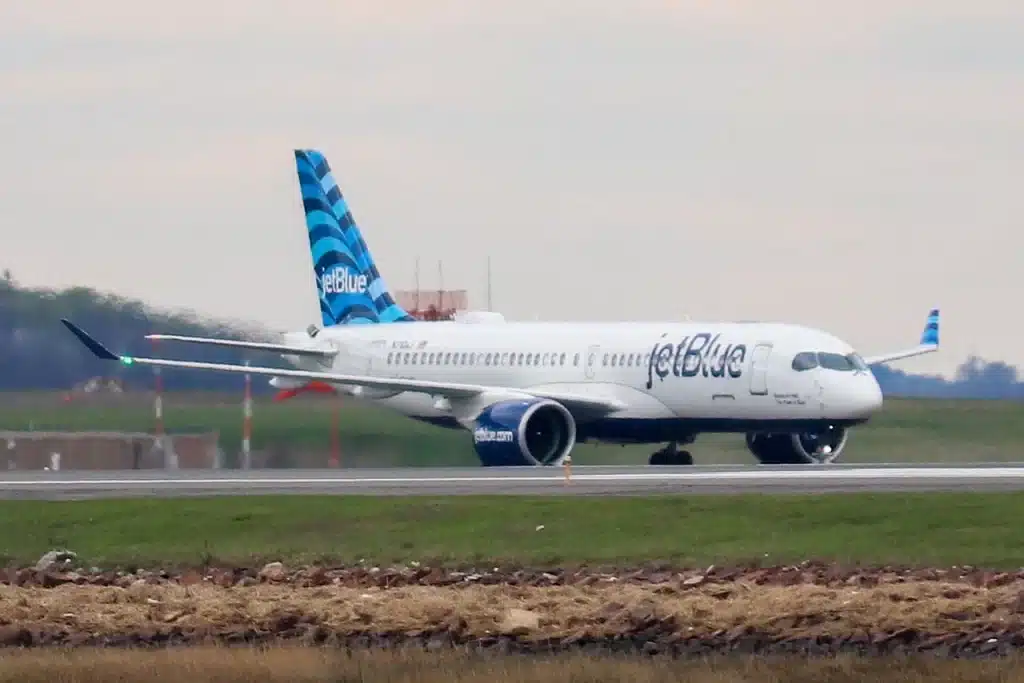
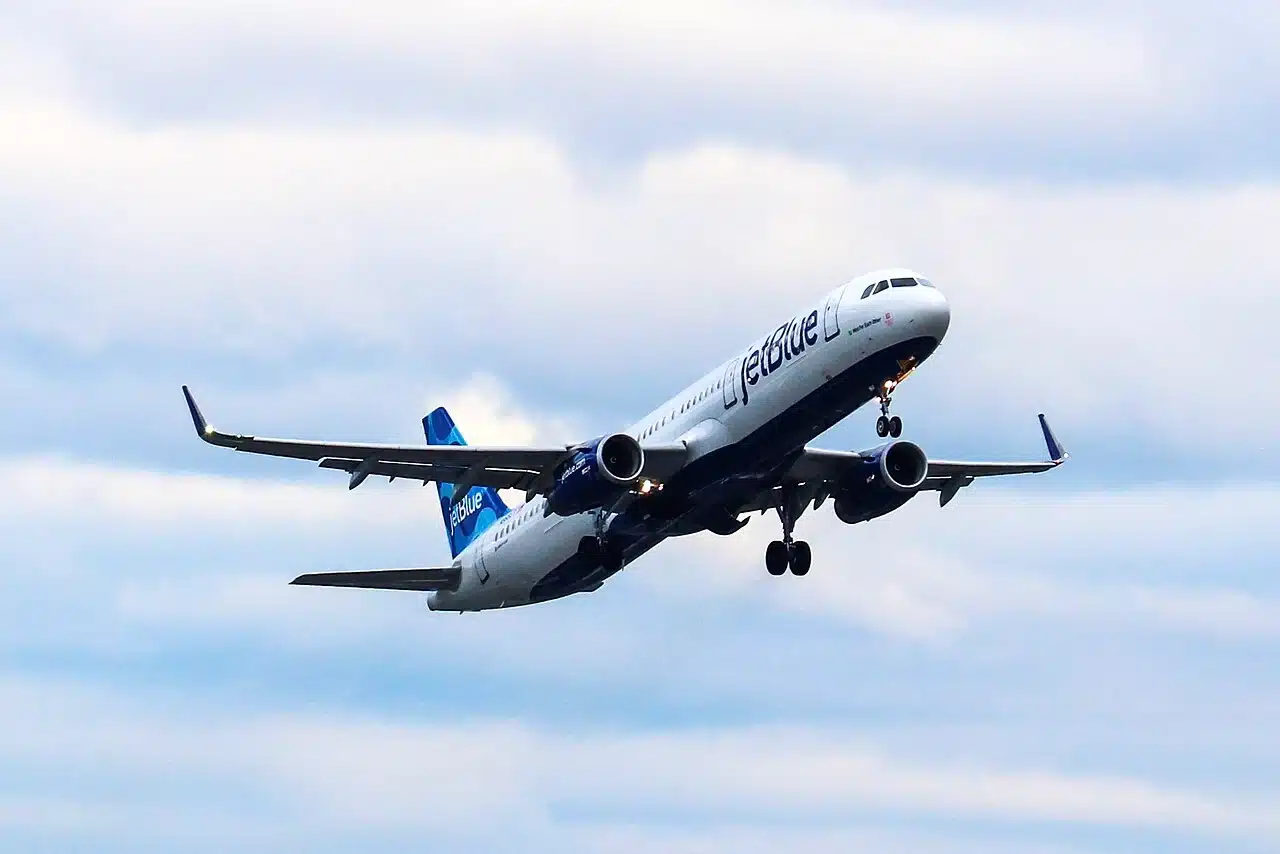
JetBlue recently partnered with United Airlines, allowing both carriers to sell each other’s flights and letting customers earn points across either airline. As part of the arrangement, JetBlue will hand over gates at JFK’s new Terminal 6, marking United’s return to the airport.
This partnership is better revenue-generating for JetBlue than Southwest’s interline agreements are for Southwest.
Southwest’s interline deals are built around passenger convenience. Bags flow through, itineraries connect seamlessly. They will gain incremental revenue due to improved load factors on their domestic flights connecting to interline partners flights.
JetBlue’s United partnership actually markets JetBlue flights to United’s customer base: business travelers, international flyers, frequent fliers with real spend. JetBlue will mostly capitalize on revenue earned from people taking advantage of the shared loyalty benefits. That’s a fundamentally different arrangement.
Look at where JetBlue currently stands at the airports Southwest ended operations from:
| Airline | Market Share – ORD | Market Share – IAD |
| JetBlue | 0.37% | 0.00% |
| Southwest | 1.77% | 2.25% |
| United | 48% | 87% |
JetBlue’s current presence at both airports is small. But through the United partnership, they gained access to both markets without committing more of their own aircraft to navigate the operational mess at O’Hare.
At Dulles, where JetBlue’s Northeast identity translates well, there’s a real opportunity to commit operations there, if they choose. But they’ll likely won’t need to, thanks to their United partnership.
This also all fits neatly into JetBlue’s ongoing Mint expansion. Chicago and Washington D.C. are exactly the kind of high-value business markets that Mint was built for. Business travelers connecting through United now have a premium JetBlue option on the other end at their choosing.
Here’s the irony: Southwest couldn’t make ORD or IAD work partly because they lacked a premium cabin product for so long. They’ve finally started rolling out premium seating but they’re abandoning the two airports where that product would have mattered most.
Now they’ll have to sell that upgrade to leisure travelers at Midway and Baltimore, which is a much harder pitch. The timing couldn’t be worse. With that said, JetBlue could be primed to benefit from Southwest’s departures.
Alaska has been a consistent thorn in Southwest’s side for years. They’ve attacked Southwest in markets where the airline felt comfortable. Most aggressively in Hawaii as of late, where the Hawaiian Airlines acquisition turned Alaska from a regional competitor into a genuine threat. Southwest has largely been reacting ever since.
Southwest’s exit from O’Hare creates another pressure point, though it’s more indirect. Alaska’s Oneworld membership means their passengers can connect seamlessly with American, British Airways, Cathay Pacific, and a long list of international partners. Many of whom operate at O’Hare.
Compare the partner exposure at each airport:
| SWA Partners at ORD | SWA Partners at IAD | AS Partners at ORD | AS Partners at IAD |
| All Nippon Airways | All Nippon Airways | American Airlines | Aer Lingus |
| EVA Air | Turkish Airlines | British Airways | American Airlines |
| Turkish Airlines | Cathay Pacific | British Airways | |
| Finnair | Cathay Pacific | ||
| Iberia | Iberia | ||
| Icelandair | Icelandair | ||
| Japan Airlines | Korean Air | ||
| Korean Air | Porter Airlines | ||
| Qatar Airways | Qatar Airways | ||
| Royal Jordanian | Royal Air Maroc | ||
| Royal Jordanian | |||
| Southern Airways Express |
Southwest’s interline partners at ORD now lose a domestic connection point entirely. Those passengers either make the trek to Midway 30 miles away or they find another domestic carrier at ORD. Alaska’s Oneworld network at O’Hare has no such problem.
That said, Alaska’s Oneworld advantage is most meaningful for premium travelers. There’s no gate exchange coming, and Alaska’s domestic market share at O’Hare won’t grow.
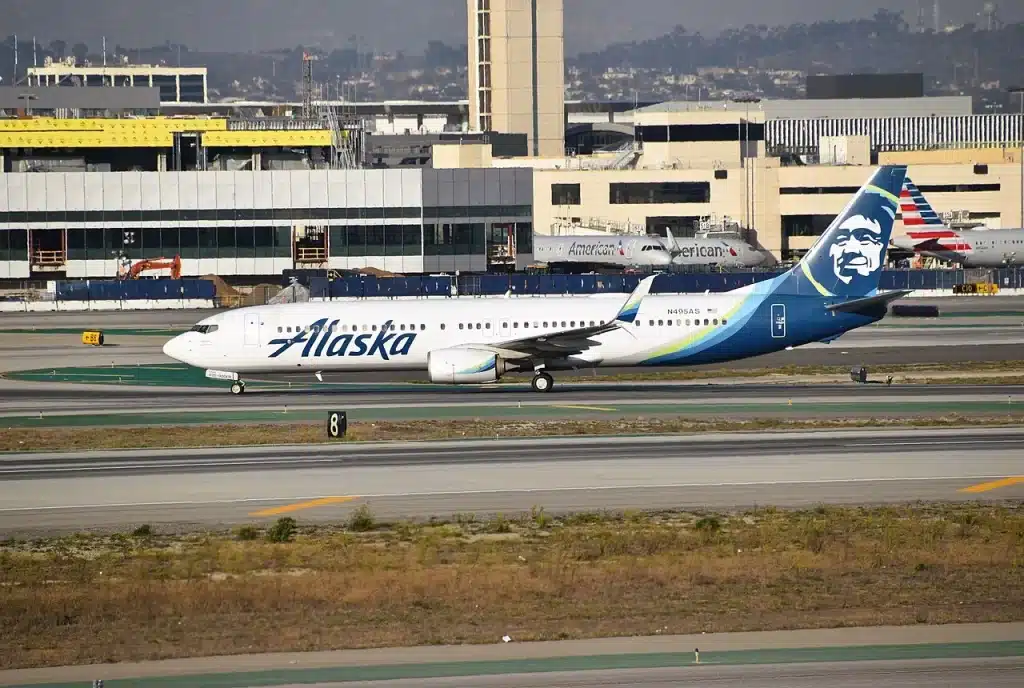
Their business class is strong, not quite JetBlue Mint territory, but a legitimate premium option. The Oneworld story is more about protecting and growing their share of the international connecting traveler than making a dramatic growth move into Chicago.
JetBlue is primed to reap the benefits of Southwest’s exit, and Dulles is the more likely expansion target. It fits JetBlue’s Northeast premium identity, and it opens up transcontinental Mint routes that pencil out well from that market.
Chicago is a different story. JetBlue doesn’t need to commit aircraft to O’Hare to benefit as the United partnership handles that. Let United and American fight over gates and slots while JetBlue captures the customers on the backend. Smart, low-risk exposure to one of the country’s busiest markets without the operational headache.
Alaska will likely stay patient. They have enough on their plate integrating Hawaiian Airlines and pushing their international expansion forward. Their play against Southwest is longer and more gradual. They’ll continue picking away at routes where Southwest thought they had a comfortable advantage. Southwest is clearly noticing; randomly launching service to Anchorage isn’t the move of an airline operating from a position of confidence.
As small as these two exits appear, the timing is strange. Southwest is in the middle of a product pivot. They want premium customers, generate more revenue from fees and fares, and own a more competitive product. But the travelers most likely to pay for all this are the ones who fly on business or internationally. And those travelers use large international airports.
Instead, Southwest is now asking their secondary airport customer base consisting of largely leisure travelers and price-sensitive fliers to carry the weight of a premium product that passengers didn’t ask for. The feedback has reflected exactly that tension.
The point-to-point model is a strength at Southwest’s scale, but it becomes a constraint when you’re trying to compete with the big three for premium revenue. This was made painfully clear during the 2022 operational meltdown, when Southwest’s lack of a hub-and-spoke backbone contributed to turning a bad weather event into a system-wide collapse that cost the airline $750 million.
Until Southwest figures out how those two identities coexist, JetBlue will keep crawling back toward relevance and Alaska Airlines may quietly become the more dangerous long-term threat.