All About Allegiant Air’s Aircraft Fleet & Routes
Allegiant Air is an ultra-low-cost air carrier found in the United States. Find out everything you need to know about its aircraft and the routes they fly.

New York Stewart International Airport is about an hour north of New York City and is destined to be a secondary reliever airport but it’s terminals are empty.
When you think of flying into the Greater New York Area, three airports come to mind: Newark, JFK, and LaGuardia. These airports provide unmatched access to New York City with broad domestic and international service. However, they are notorious for congestion. Both on the tarmac and on the roads & rails leading to them.
For New Yorkers seeking alternatives, secondary airports like Long Island MacArthur and Westchester County provide you with other options. But there’s another choice that remains largely overlooked: New York Stewart International Airport in Newburgh, found in the heart of the Hudson Valley.
Stewart does indeed have airline service, but it’s extremely limited as of late. This article examines why airlines consistently struggle at Stewart and what needs to happen for the airport to become a viable alternative.
The most significant challenge currently facing Stewart is lack of demand. Newburgh is a modestly populated city surrounded by farm land about an hour north of New York City. According to census data, Orange and Ulster counties near Newburgh have a combined population of 560,000 people.
The New York City metro area has well over 20 million residents which is about 35 times the population of the surrounding Newburgh area. This relatively sparse population density makes it very unattractive and nearly impossible for airlines to operate profitably.
But you may wonder, why do other upstate airports like Binghamton, Albany, and Syracuse thrive commercially while Stewart struggles? The simple answer is user case. Those three airports benefit from need-based travel driven by major universities. Binghamton University, Syracuse University, and SUNY Albany each have predictable seasonable demand during move-in and school breaks.
Newburgh’s Stewart sits close by to Army West Point, Marist University, and other Hudson Valley institutions, these schools generate a fraction of the student travel volume compared to their peers upstate. Syracuse University alone enrolls over 22,000 students. Marist University serves about 5,000.
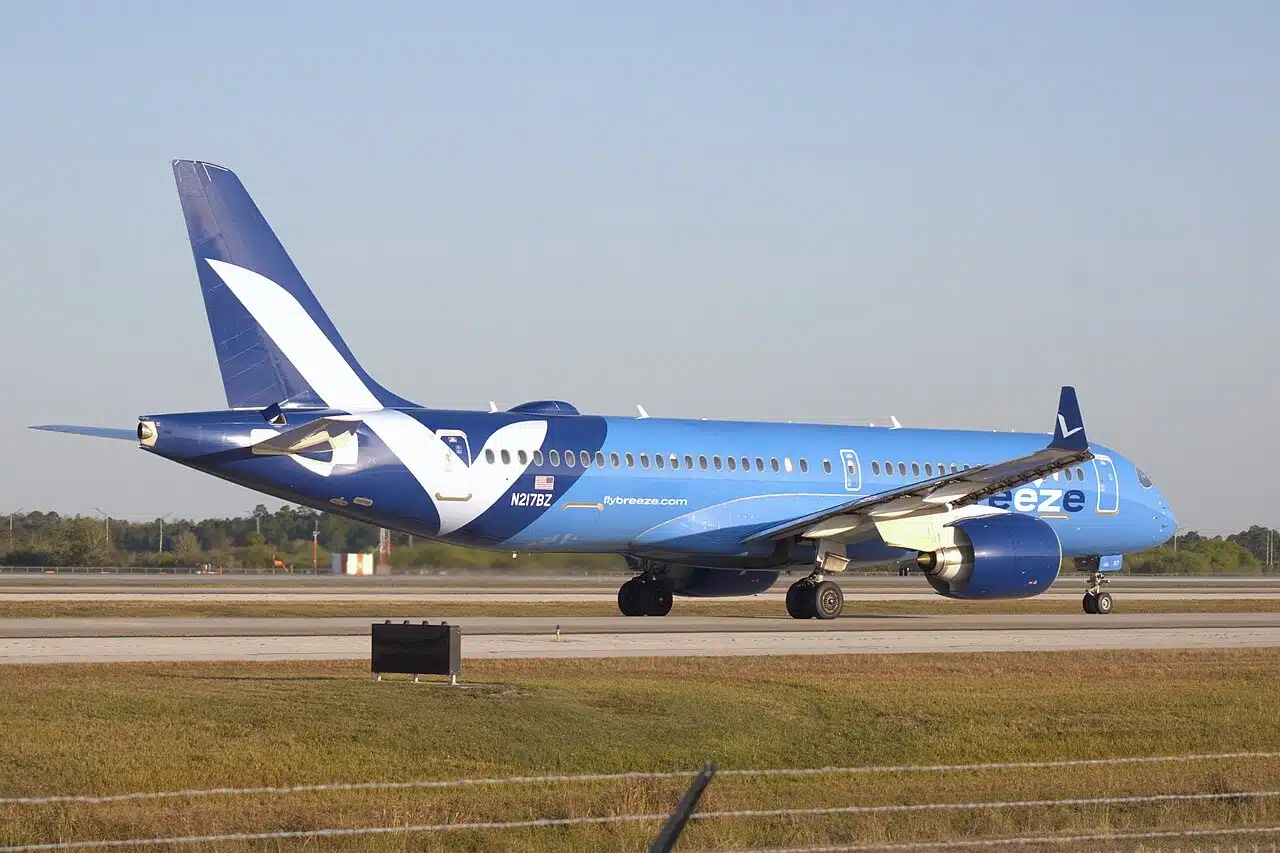
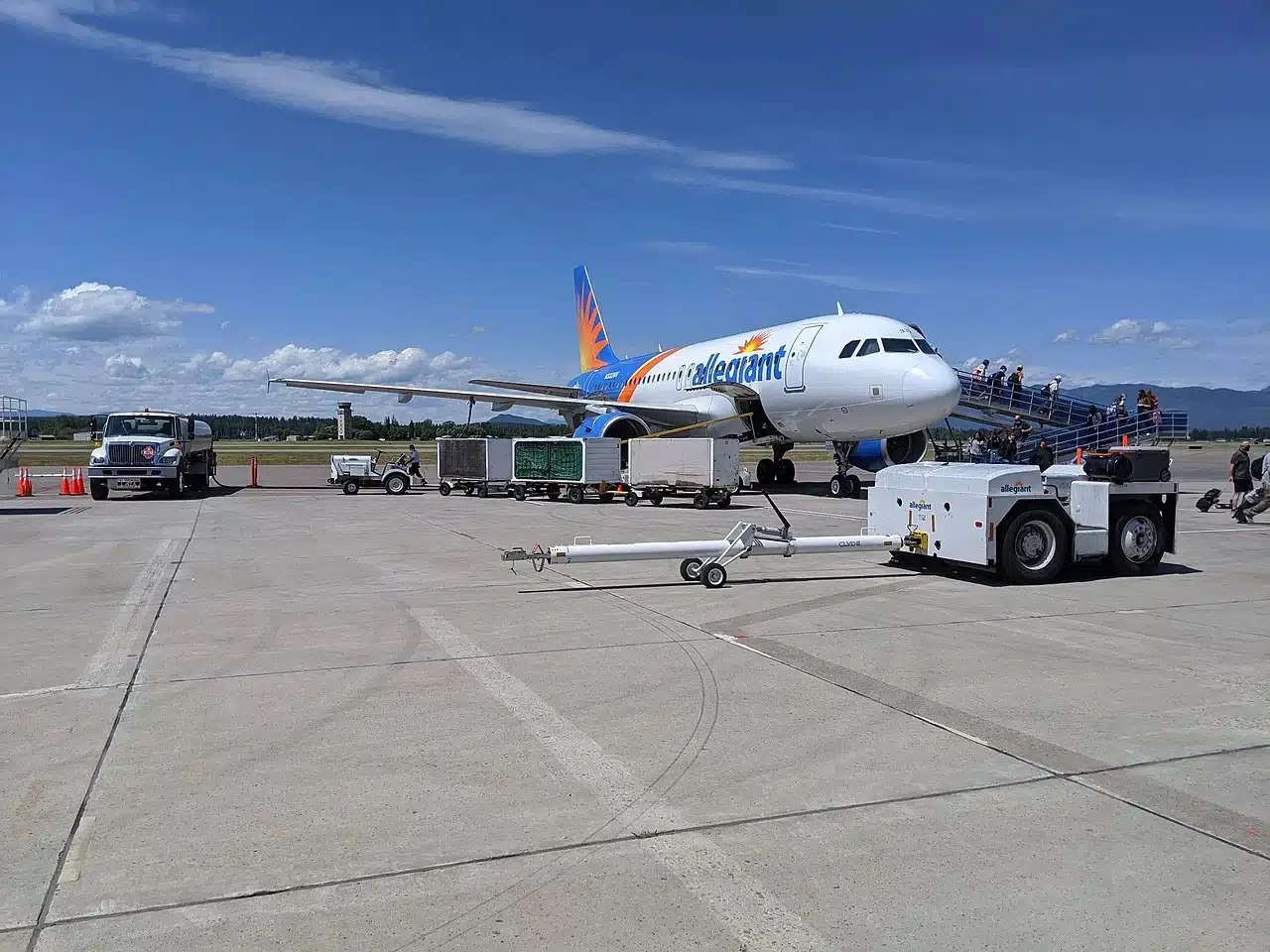
Right now, Breeze Airways and Allegiant Air are the sole operators from Stewart. They primarily offer flights down to Florida and Carolina destinations. Right now, Stewart only serves as a solution to Hudson Valley residents looking for a Florida vacation. But for any travel desires beyond that, you’ll need to make your way to the major NYC-area airports.
The results of this phenomenon clearly shows in the airports dwindling passenger volumes.
Passenger Traffic Analysis (1994-2024)
The journey of getting to New York Stewart International Airport presents many obstacles that deter most potential travelers. Only two major highways serve the airport: I-87 and I-84. Also, there is no direct rail connection from the New York City metropolitan area.
Right now, if you’re getting to Stewart from Manhattan using public transportation, it’ll require taking the Metro-North’s Hudson Line then two bus transfers. The trip time is 2.5 to 3 hours, which is longer than most flights from Stewart to any Florida destination.
The transportation issue creates a paradox: Stewart may have cheaper fares and shorter security lines, but the time required to reach it from New York City may eliminate these advantages. For these residents, the more rational choice would be to deal with the congestion at JFK, LaGuardia, or Newark.
Stewart’s ownership by the Port Authority of New York and New Jersey comes with very steep operating expenses that simply discourage airline service. Sources indicate that Port Authority airports can have 30 to 50% higher landing fees and terminal costs than comparable secondary airports in other regions.
Historically, the Port Authority has struggled to bring in new carriers, even when offering benefits like fee reductions. These financial incentives along with the small market of nearby travelers have made it difficult for airlines to justify accepting the challenge of overcoming fundamental economics.
For legacy carriers and most low-cost airlines already offering from Newark, JFK, and LaGuardia, expanding northward to Stewart represents pure risk with low reward. Only ultra low cost carriers have been willing to test the market, but they also face challenges.
Now with Allegiant Air and Breeze Airways competing for the same limited market share at the airport, long term sustainability for one or the other has gotten that much difficult.
Stewart’s timeline includes misguided promotions and attempts to land international service at the airport. Officials were successful in attracting Norwegian Air, Play Airlines, and Atlantic Airways with dreams of Newburgh of becoming an international gateway.
While Stewart’s long runway was able to physically accommodate heavier than normal international planes (most of these airlines ran narrowbodies), the passenger demand simply never existed, nor ever will. For example, Norwegian’s transatlantic service from Stewart operated with load factors below 60% which is significantly lower than the 80 to 85% break even point for international routes.
At the end, all of these international ventures failed.
The solution requires officials to accept Stewart’s identity as a secondary airport and target carriers that specialize in this market segment. Legacy carriers won’t come. Most low cost carriers won’t come either. Even Spirit and Frontier, despite being ultra low cost carriers, have grown too large to consider Stewart viable.
The right airline partners are ultra low cost and niche carriers. Allegiant Air and Breeze Airways are already present at the airport, both fit that mold. Potential additions could be Avelo Airlines and Sun Country Airlines.
Avelo Airlines presents an interesting opportunity. They already operate from nearby New Haven and Windsor Locks, Connecticut. They could compete effectively with Breeze on Carolina routes, from Newburgh. Also, their planned acquisition of Embraer E195-E2 planes could enable transcontinental flights for the airline, which could definitely leverage Stewart’s longer runway.
Sun Country Airlines brings a different value proposition. While most of their passenger network requires Minneapolis connections, they could fill up the Midwest service gap that is existing at Stewart. Also, Sun Country operates cargo operations. They could serve as an alternative with FedEx (Stewart’s only cargo carrier) during peak shipping seasons, which will support Sun Country’s second revenue stream.
Stewart’s pitch to these airlines should emphasize being a low-competition entry point to the New York market. At a little over an hour from NYC, it’s within reasonable commuting distance with lots of upside if infrastructure improvements are made.
Success hinges on creating demand for Stewart, and that responsibility falls on the shoulders of the Port Authority of New York and New Jersey. Operating a relatively large airport with minimal commercial service wastes potential revenue for local communities and New York State.
The single most critical investment needed: direct rail service to Stewart International Airport.
Newburgh sits along a straight path up the Hudson River from northern New Jersey and New York City. Metro-North infrastructure already exists to support northbound traffic. The only thing missing from the equation is a dedicated spur line directly to the airport terminal. While this requires significant capital investment and community lobbying, it is a critical piece needed for marketing Stewart as a convenient alternative.
Direct rail access will transform the value proposition towards serving cost-conscious travelers. Newark, JFK, and LaGuardia offer limited ultra-low-cost-carrier-options. Factoring in expensive overnight parking ($30 – $40 per day) and lengthy TSA queues, these airports become very unattractive for budget travelers.
With rail service, Stewart could offer the same travel time and cost as taking a train to Newark or JFK, but with less crowds yielding a less stressful experience. Passengers could board a train, arrive at Stewart, breeze through TSA, and reach their gate..all in less time than navigating some of the chaos at NYC metro airports.
This investment will benefit airlines, travelers, and the state economy simultaneously.
New York Stewart International Airport operates very far below its potential. It’s current state costs New York State, communities surrounding Newburgh, and airlines millions of dollars in unrealized revenue. Meanwhile, Hudson Valley travelers still continue to rely on congested, expensive NYC-area airports for most of their travel needs.
Revitalizing Stewart requires two efforts: getting airlines that match the market reality (ultra low cost carriers serving leisure destinations, not international carriers) and investing in rail infrastructure to make the airport genuinely accessible to the broader New York metro area.
The opportunity is there. The question is whether officials will make the necessary commitments to realize it.